Most events need two things: event liability insurance and, when real money is on the line, event cancellation insurance. If your event involves alcohol, rented equipment, hired staff, or a big financial commitment to a venue, add equipment/property coverage, workers’ compensation, and possibly professional liability to that list. Those five categories cover the vast majority of situations event hosts face in the United States.
Before you do anything else, do two things. First, pull up your venue contract and check exactly what insurance language it requires. Most contracts specify minimum liability limits and demand you name the venue as an “additional insured” on your certificate. Second, buy your liability policy the moment your event date is locked in. Waiting until the week before is how organizers end up scrambling for a certificate of insurance the venue won’t accept because it arrived too late or missed a clause.
Here’s the shortlist worth evaluating for almost any event:
- Event liability insurance — covers third-party bodily injury or property damage, often the venue’s baseline requirement
- Event cancellation/contingency insurance — protects your deposits, budget, and revenue if the event can’t happen
- Equipment/property coverage — protects rented AV gear, staging, or fabricated builds against damage or theft
- Workers’ compensation — required in most states once you have employees working the event
- Professional liability (E&O) — protects planners and vendors against claims of negligent advice or service failure
Pro Tip: Don’t wait for a venue to demand proof of coverage before you start shopping. Portals like SpecialEventInsurance can issue a certificate of insurance within minutes once you’ve picked limits, but only if you’ve already answered the underwriting questions about attendance, alcohol, and venue type.
Key Takeaways
Most US event hosts need event liability insurance at minimum, and cancellation coverage becomes essential once real money or revenue is at stake.
| Point | Details |
|---|---|
| Confirm liability first | Buy event liability insurance as soon as your venue and date are locked in. |
| Separate liability from cancellation | Liability protects third parties; cancellation protects your own financial exposure. |
| Check venue COI wording | Verify additional insured and waiver of subrogation language before your event, not after. |
| Escalate high-value builds | Custom fabrication and headline talent exposure often need a broker, not a portal quote. |
| Work with King Sixteen | King Sixteen coordinates COIs and vendor compliance across production, though it doesn’t sell policies itself. |
Table of Contents
- What Is Event Insurance and Why the Liability/Cancellation Split Matters
- Catalog of Event Insurance Types (and Who Actually Buys Each One)
- Add-Ons, Extensions, and the Exclusions Most Hosts Miss
- How Much Does Event Insurance Cost, and When Should You Buy It?
- Buying Your Policy: The Step-by-Step Process for a Certificate of Insurance
- Questions to Ask Insurers, Venues, and Vendors Before You Sign
- Tailoring Coverage for High-End Experiential Activations and Multi-Day Festivals
- State Rules and Regional Variations Worth Checking
- How King Sixteen Thinks About Insurance on Every Production
- Let King Sixteen Handle the Insurance Coordination Headache
- Where to Verify Policy Details and Current Carrier Terms
- Frequently Asked Questions
- Sources
What Is Event Insurance and Why the Liability/Cancellation Split Matters
Event insurance is a short-term or annual policy that protects an event host, vendor, or venue against the financial fallout of something going wrong during a planned gathering. That’s the whole concept in one sentence. The complexity comes from the fact that “something going wrong” splits into two entirely different categories of risk, and conflating them is the most common mistake first-time organizers make.
The National Association of Insurance Commissioners draws a clean line here: liability insurance covers injury or property damage to a third party, while cancellation insurance protects your own financial investment if the event doesn’t happen as planned. A guest slipping on a wet dance floor is a liability claim. A headline act pulling out three days before your festival, forcing a refund of $80,000 in ticket sales, is a cancellation claim. Both are “event insurance.” Neither one substitutes for the other.
Liability insurance answers the question “who gets paid if someone else is hurt or their property is damaged at my event?” Cancellation insurance answers a completely different question: “who reimburses me if my own money, deposits, or revenue disappears because the event itself falls apart?”
Think about a wedding reception with an open bar. If a guest overserved at your bar gets into a car accident on the way home, host liquor liability is what responds. If a snowstorm shuts down the venue three days before the ceremony and you lose your $15,000 in nonrefundable vendor deposits, that’s a cancellation claim, and a standard liability policy does nothing for you there. The NAIC also warns that many hosts assume a homeowner’s policy or an existing commercial general liability policy already covers a one-off event. It usually doesn’t. Most personal and commercial policies carry explicit exclusions for short-term special events or alcohol service, which is exactly why dedicated event coverage exists as its own product category.
- Liability protects other people from you
- Cancellation protects you from circumstances beyond your control
- Most events need some liability coverage; only events with real financial exposure need cancellation coverage
Catalog of Event Insurance Types (and Who Actually Buys Each One)
Here’s the practical breakdown of every major policy type you’ll encounter while planning a US event, what each one actually pays for, and who typically foots the premium.
Event liability insurance covers third-party bodily injury and property damage claims arising from your event, and it’s the coverage venues ask for most often. A guest trips over a cable, a caterer’s fryer starts a small fire, a rented tent collapses in wind: this is the policy that responds. Hosts typically buy this directly, though some venues offer add-on options at booking. Limits commonly run from $1 million to $2 million per occurrence for standalone events, with venues frequently requiring $1 million minimum before you’re allowed on the property.
Host liquor liability is a variant (or endorsement) of general liability specifically for events serving alcohol without a licensed bartender or caterer handling it. If you’re serving wine at a backyard corporate mixer without a licensed vendor, this closes a gap that standard general liability sometimes excludes. SpecialEventInsurance bundles host liquor liability into many of its short-term policies specifically because DIY bar setups are such a common exposure at private parties and corporate happy hours.
Event cancellation and contingency insurance reimburses budgeted costs and lost revenue if your event is canceled, postponed, or relocated due to a covered peril. Beazley’s contingency products note that this coverage protects both fixed costs already spent and projected gross revenue, and it scales from a single wedding to a multi-day festival. A festival promoter who loses a headline act to injury, or a conference organizer whose venue floods a week out, is the classic buyer here. Cancellation policies typically require purchase well ahead of the event, often 30 to 60 days minimum depending on the carrier, so this is not a last-minute purchase like liability often can be.
Equipment and property coverage, sometimes written as inland marine insurance, protects rented AV equipment, staging, custom fabrication, and other physical assets against theft, fire, or accidental damage. Production companies and agencies building out custom environments are the most frequent buyers, since a single damaged LED wall or fabricated set piece can run into five figures.
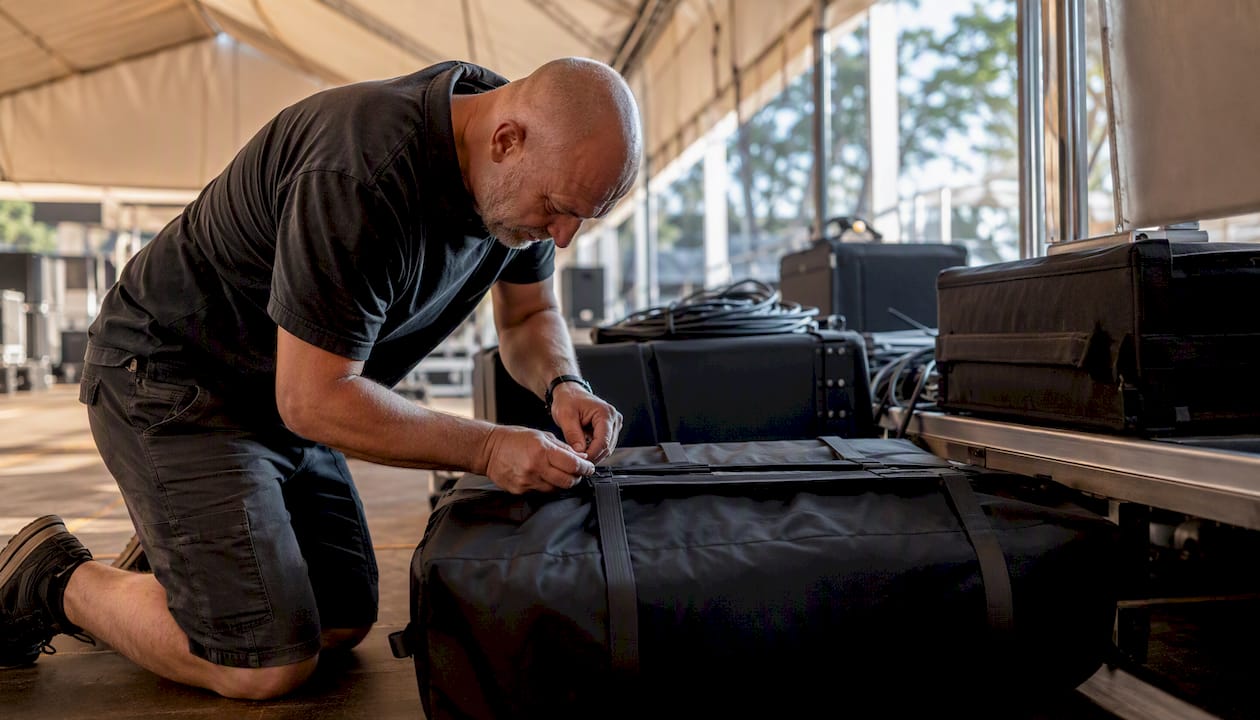
Workers’ compensation covers medical costs and lost wages for employees injured while working your event, and most states require it the moment you have paid staff on-site, even for a single day. If King Sixteen or another production partner is staffing your build, confirm their workers’ comp is active and ask for proof.
Professional liability, or errors and omissions (E&O), protects planners, consultants, and vendors against claims that their advice, service, or execution caused a financial loss, separate from physical injury. An event planner who books the wrong date on a contract, causing a client to lose a nonrefundable venue deposit, is a textbook E&O scenario.
Hired and non-owned auto liability covers vehicles you rent or use for the event that you don’t own outright, such as a rented box truck for equipment transport or a shuttle service you’ve contracted.
Non-appearance and prize indemnity coverage reimburses you specifically when a scheduled performer, speaker, or key participant fails to show, and it’s usually written as an extension to a cancellation policy rather than sold standalone. Chubb’s event cancellation factsheet flags non-appearance as one of the extensions that often needs specific underwriting attention rather than a boilerplate add-on.
Terrorism and political violence coverage protects against losses tied to acts of terrorism or civil unrest, which standard cancellation policies frequently exclude or sublimit. Beazley lists terrorism as a common extension available on its event cancellation products, though it’s typically priced and underwritten separately from the base policy.
| Policy type | Who typically buys it | Typical trigger example |
|---|---|---|
| Event liability | Host, sometimes vendor | Guest injury, property damage |
| Host liquor liability | Host serving alcohol without licensed bar staff | Guest overserved, causes an incident |
| Event cancellation | Host, promoter, sponsor | Venue loss, severe weather, illness of key participant |
| Equipment/property | Production company, vendor | Damaged rented AV or fabricated set |
| Workers’ compensation | Employer (host or vendor with staff) | Staff injury during setup or show |
| Professional liability (E&O) | Planners, consultants | Contract error causing financial loss |
| Non-appearance | Promoter, sponsor | Headliner cancels last minute |
| Terrorism/political violence | Large-scale event organizer | Civil unrest forces cancellation |
Pro Tip: Check whether your vendor’s certificate of insurance actually lists YOU or your venue as an additional insured. A vendor can carry $2 million in coverage and it still won’t help you if their certificate names only their own business.
Add-Ons, Extensions, and the Exclusions Most Hosts Miss
A base liability or cancellation policy rarely covers everything an ambitious event actually needs. The extensions below are where organizers either close real gaps or waste money padding coverage they’ll never use, so it pays to match the add-on to your actual risk rather than buying every option on the quote screen.
- Weather sublimits extend cancellation coverage to specific perils like rain, snow, or wind, but many policies cap the payout for weather claims well below the total policy limit
- Non-appearance riders cover the financial hit when a named performer, speaker, or VIP fails to show, and Chubb notes this extension often requires its own underwriting review rather than automatic inclusion
- Communicable disease riders address cancellations tied to illness outbreaks, an extension that became far more scrutinized industry-wide and is now frequently excluded or heavily sublimited by default
- Full terrorism extensions broaden coverage beyond a basic terrorism sublimit, relevant for large public gatherings or events with elevated security concerns
- Care, custody, and control coverage protects rented or borrowed equipment while it’s in your possession, closing a gap standard liability often leaves open
- Hired and non-owned auto extends liability to vehicles you rent or contract for the event rather than vehicles your organization owns
On the exclusion side, read your policy for acts of war carve-outs, communicable disease exclusions, and any clause excluding “contractually assumed liability,” which matters if your venue contract makes you responsible for damages beyond what a standard policy covers. PHLY and other specialty carriers also flag that weather extensions frequently come with their own sublimits separate from the main policy limit, so a “$2 million” cancellation policy might cap weather-related payouts at a fraction of that.
Pro Tip: When an add-on quote looks suspiciously cheap for a genuinely high exposure, like non-appearance coverage for a six-figure headliner fee, treat that as a signal to escalate to a specialty underwriter rather than accepting a standard portal quote. A price that low usually means the underwriting hasn’t actually priced your real risk.
How Much Does Event Insurance Cost, and When Should You Buy It?
Basic event liability insurance for a single-day event often starts in a modest range, with GEICO’s event insurance pages citing starting prices around $75 to $235 depending on attendance, alcohol service, and the limits you select. Event cancellation coverage tends to start higher, with typical starting prices affected by your total budgeted costs and revenue at risk. A backyard birthday party and a 3,000-person conference with six-figure sponsorship revenue are going to land at very different points on that scale.
The main levers that move your premium up or down are attendance size, whether alcohol is served, the type of venue (outdoor festivals carry more weather exposure than indoor conference centers), the value of rented or owned equipment on-site, and how much financial exposure you’re asking cancellation coverage to protect. A wedding with 80 guests and no alcohol vendor prep will price far below a multi-day music festival with a $2 million production budget and a headline act contract.
Timing matters as much as price. Buy liability coverage as soon as your date and venue are confirmed, since most portals can issue a policy and a certificate of insurance within a day or two. Cancellation coverage works differently: carriers typically require you to purchase well before the event, often 30 days out at minimum, because the whole point of the product is protecting against risks that develop over time, not risks that are already unfolding.
| Coverage type | Typical starting cost | Typical limits available | When to buy |
|---|---|---|---|
| Event liability | Around $75 to $235 for basic single-day coverage | $1 million to $2 million per occurrence | At booking, ideally 30+ days ahead |
| Event cancellation | Starting around $130, scales with budget | Based on budgeted costs and revenue | Minimum 30 to 60 days before event |
| Equipment/property | Varies by equipment value | Scheduled to replacement value | Before load-in |
| Weather extension | Added to cancellation premium | Often sublimited below full policy | With cancellation policy purchase |
- Don’t wait until the final week to buy cancellation coverage; most carriers won’t quote it that close to the date
- Confirm your venue’s specific minimum liability limit before choosing a policy, since underinsuring against a contract requirement can get your certificate rejected
- If alcohol is involved, factor host liquor liability into your quote from the start rather than discovering the gap later
Buying Your Policy: The Step-by-Step Process for a Certificate of Insurance
Getting insured and getting your certificate of insurance into a venue’s hands is a sequence, not a single transaction. Here’s the order that actually works.
- Audit your exposures first. Walk through your event and list every risk: guest count, alcohol, rented equipment, hired vendors, staff on payroll, and any financial deposits you’d lose if the event fell through.
- Choose your policy types and limits. Match what you found in step one to the coverage categories above, then check your venue contract for any specific minimum limit language.
- Gather your event details. Insurers will ask for the event date and time, exact location, estimated attendance, whether alcohol will be served, ticketing or sponsorship revenue if applicable, and copies of vendor or talent contracts.
- Get quotes. Fast online portals work well for straightforward, single-day events with modest limits. Complex or high-value events (see the Wellesley College risk management guide for a useful risk-checklist model) usually benefit from a broker who can shop specialty markets.
- Purchase the policy once you’ve confirmed limits match both your risk and your venue’s requirements.
- Request your certificate of insurance immediately, and specifically ask that the venue be listed as an additional insured if your contract requires it.
Venues typically want to see specific language on your COI, not just proof that a policy exists. Common requirements include naming the venue as additional insured, adding a waiver of subrogation so your insurer can’t turn around and sue the venue after paying a claim, and including a primary and noncontributory clause, which means your policy pays first before the venue’s own insurance is touched at all.
- Confirm the policy effective dates cover setup and teardown, not just the event hours themselves
- Save a copy of every vendor’s certificate of insurance in one folder, and check that each one lists you as additional insured if your contract with them requires it
- Ask your insurer how quickly they can reissue a corrected certificate if a venue rejects the first version over missing language
| Point | Details |
|---|---|
| Confirm venue COI wording | Check for additional insured, waiver of subrogation, and primary/noncontributory clauses before purchasing. |
| Match limits to contract | Buy at least the minimum liability limit your venue contract specifies. |
| Gather vendor documentation | Collect every vendor’s certificate of insurance and verify additional insured status. |
Questions to Ask Insurers, Venues, and Vendors Before You Sign
The fastest way to find a coverage gap is to ask the right questions before you buy, not after a claim gets denied. Start with your insurer or agent: what perils are explicitly excluded, is host liquor liability included or does it need an endorsement, how quickly can they issue a corrected certificate of insurance if the venue rejects the first version, and are there sublimits on weather or non-appearance extensions hiding inside a policy that looks comprehensive on paper.
Then turn the same scrutiny toward your venue and vendors. Does the venue carry its own general liability policy, and will they name you as additional insured in return, or is that a one-way requirement? Does each vendor, from the caterer to the AV crew, carry their own liability coverage, or are they expecting your policy to cover their mistakes too? If a vendor can’t produce a current certificate of insurance within a day of asking, that’s worth treating as a scheduling risk, not just a paperwork delay.
A handful of red flags should push you straight to a broker instead of a quick online quote. Watch for a quoted premium that seems too cheap for the actual exposure, since specialty underwriters consistently note that unusually low pricing on complex risks often means the carrier hasn’t priced the real exposure at all. Be wary of carriers that can’t produce an A.M. Best rating or proof of state licensing, and read the exclusions section line by line for any peril you specifically expected to be covered but isn’t mentioned anywhere in the policy.
- If a policy excludes a peril central to your event (outdoor concert with no weather language, open bar with no liquor liability), that’s a dealbreaker, not a minor gap
- A vendor unwilling to share their certificate of insurance before signing a contract is a scheduling and liability risk
- Trust a broker over a portal once your event involves six-figure budgets, multiple vendors, or talent contracts with cancellation exposure
Tailoring Coverage for High-End Experiential Activations and Multi-Day Festivals
Standard portal policies work well for a wedding, a corporate holiday party, or a single-day pop-up. They start to break down once you’re building custom environments, booking talent with real cancellation exposure, or coordinating international suppliers, and that’s exactly the territory where production teams need to think past the instant-quote screen.
PHLY’s event insurance guidance points to a clear line: high-profile activations, multi-day conferences, and events with high-value assets typically need specialized underwriters and custom policy forms rather than automated portal coverage. A festival with a $500,000 production budget, a headline act, and rented staging worth six figures has more moving parts than any standard application form can capture.
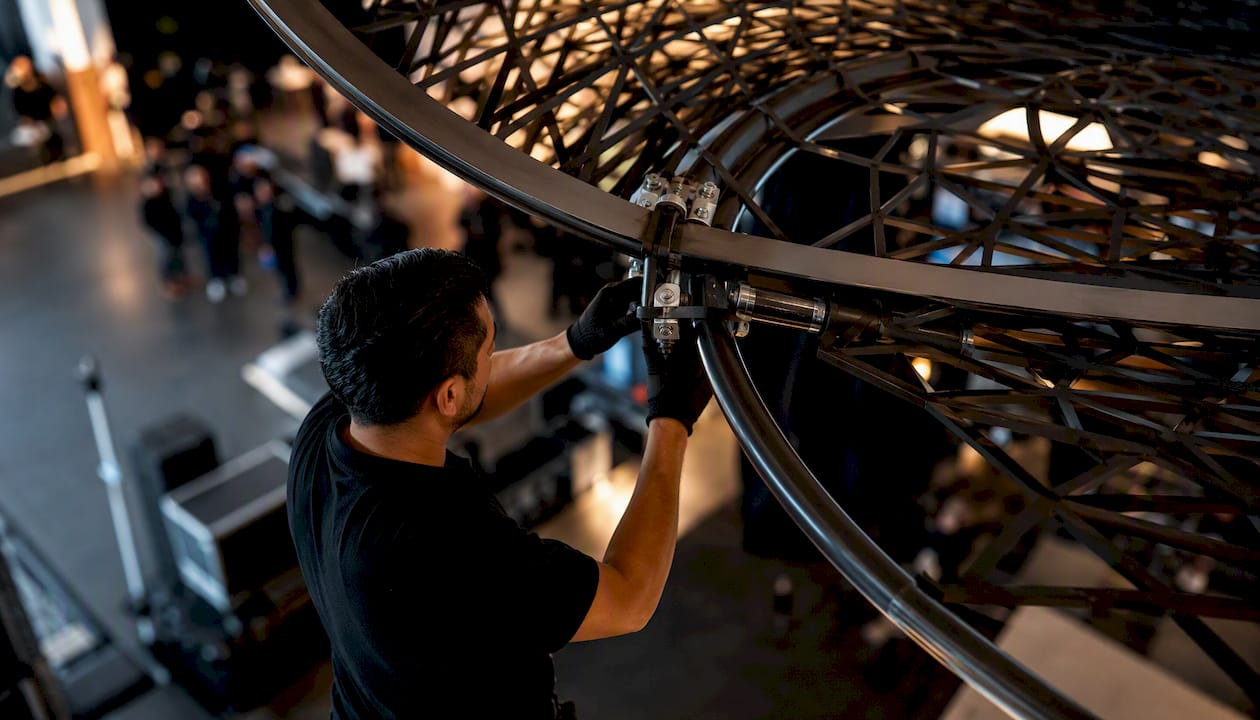
Production teams building physical environments should insist on a specific set of contract clauses and coverage lines before signing off on a build, a topic detailed at All City Graphix event design services. Inland marine coverage should follow freight and equipment from the warehouse to the venue and back, not just while it’s on-site. Care, custody, and control language should explicitly extend to rented and borrowed items your team is responsible for during setup. Custom fabrication deserves the same treatment builder’s risk gives a construction project: coverage that follows the piece through fabrication, transport, and installation. And any contract with a headline performer needs precise non-appearance wording that spells out exactly what triggers a payout.
Consider two contrasting scenarios. A small corporate activation, say a single-evening product launch for 150 guests in a rented gallery space, can usually be handled with a standard liability policy plus equipment coverage for any rented AV, purchased through a portal in under an hour. A multi-day festival with custom-built stages, a national touring act, ticketed attendance, and sponsor contracts is a different animal entirely: it needs cancellation coverage with non-appearance and weather extensions, inland marine for freight, and very likely a broker relationship with a specialty underwriter who understands live event risk rather than a generic small-business policy. Custom builds and installations carry their own fabrication exposure, a topic worth reading alongside general event trends shaping 2026 activations.
Pro Tip: If your event includes a custom-fabricated centerpiece, like a branded installation or immersive set piece, ask your insurer directly whether inland marine coverage follows the piece during transport and installation, not just while it sits in the venue. That gap between “in the venue” and “in transit” is where expensive builds most often go uninsured.
| Factor | Small activation | Multi-day festival |
|---|---|---|
| Coverage source | Standard portal policy | Broker with specialty underwriter |
| Cancellation need | Low, often skipped | High, with non-appearance and weather extensions |
| Equipment coverage | Basic rented AV | Inland marine for freight plus fabrication |
| Purchase timeline | Days before event | 30 to 60+ days ahead |
State Rules and Regional Variations Worth Checking
Insurance regulation in the United States is set state by state, which means the specifics of what’s required, and how it’s sold, shift depending on where your event happens. Workers’ compensation is the clearest example: nearly every state requires it once you have employees, but the threshold for how many employees trigger the requirement, and which exemptions apply to part-time or seasonal event staff, varies by state law.
Liquor liability rules follow a similar pattern. Some states require anyone serving alcohol at a public or ticketed event to carry a specific liquor liability endorsement or work with a licensed caterer, while others leave that decision to the venue’s own insurance requirements rather than state statute. Local permitting offices, particularly for outdoor festivals or events on public land, frequently set their own minimum liability limits as a condition of the permit itself, and those limits can run higher than what a standard portal policy defaults to.
Because these rules shift by jurisdiction and change over time, treat this as general guidance rather than a substitute for checking your specific state’s insurance department or a licensed local agent. Confirm current requirements with your state’s insurance regulator or a broker licensed in that state before finalizing coverage, especially for public events requiring a permit.
How King Sixteen Thinks About Insurance on Every Production
Insurance coordination isn’t glamorous, but on every event we produce, it’s one of the first workstreams we open, not one of the last. We start collecting vendor certificates of insurance the moment contracts are signed, cross-checking each one against the venue’s specific additional insured and waiver of subrogation language before anyone shows up for load-in. That early timeline matters more than people expect: a certificate that gets flagged as incomplete two days before an activation creates a scramble that’s entirely avoidable if it’s caught three weeks earlier.
Vetting vendors on insurance is part of how we choose who we work with in the first place. A production partner who can’t produce a current certificate quickly, or whose limits don’t match the scale of what they’re building, tells us something about how they run their business generally. We’ve also learned to set limits based on the actual exposure of a build, not a generic default. A custom fabricated installation with real material value on-site needs different coverage thinking than a rented folding-chair setup, and treating them the same is how gaps happen.
One example, without getting into client specifics: on a multi-day activation involving a custom-built structure, we pushed the client’s insurance conversation earlier than the standard timeline specifically because the fabrication value was high enough that a standard portal policy wouldn’t have captured the in-transit exposure. That decision shaped the vendor contract language before a single piece left the fabrication shop.
Let King Sixteen Handle the Insurance Coordination Headache
King Sixteen isn’t an insurer, and we don’t sell policies. What we do is sit inside the messy middle of event production, coordinating vendor certificates, chasing down additional insured language, and reviewing contracts so nothing slips through before load-in day. If you’ve read this far and you’re already dreading the certificate-collection process for a multi-vendor activation, that’s exactly the kind of coordination work we absorb for our clients.
Our team manages the logistics layer around production, including vendor compliance, contract review, and making sure every certificate of insurance actually matches what your venue requires before it becomes a last-minute fire drill. That’s a meaningful part of what makes our experiential marketing production work end-to-end rather than leaving clients to chase paperwork between five different vendors on their own. For private events and corporate buyouts specifically, our private events team applies the same coordination approach to smaller-scale, higher-touch gatherings. If your next activation involves custom fabrication, multiple vendors, or a venue with strict COI requirements, reach out and we’ll walk through what coordination support looks like for your specific event.
Where to Verify Policy Details and Current Carrier Terms
Before finalizing any policy, read the actual carrier forms and exclusions rather than relying on a summary page, since terms shift between carriers and change over time.
- NAIC’s consumer guidance on event insurance explains the liability versus cancellation distinction in plain language
- Chubb’s event cancellation product factsheet details common extensions and where specialty underwriting applies
- Beazley’s event cancellation product page outlines coverage for budgeted costs, gross revenue, and available extensions
- SpecialEventInsurance’s short-term liability portal offers sample pricing and fast certificate issuance for single-day events
- Thimble’s overview of event insurance types provides an additional consumer-facing breakdown of core coverage categories
- Allstate’s event insurance overview covers common venue COI requirements for weddings and private events
Frequently Asked Questions
Do I need event insurance if the venue already has its own policy? Usually yes. A venue’s own insurance protects the venue’s property and business, not your specific event or your guests. Most venue contracts require you to carry your own event liability policy and name the venue as additional insured on top of whatever coverage the venue already carries.
How much does event insurance cost for a small event? Basic event liability insurance for a modest single-day event often starts around $75 to $235, according to GEICO’s published pricing, with cost rising based on attendance, alcohol service, and the limits you choose. Cancellation coverage typically starts higher and scales with your total budgeted costs.
What’s the difference between a certificate of insurance and the policy itself? The certificate of insurance is a short summary document proving a policy exists, listing the insurer, limits, and effective dates. Venues use it to confirm you’re covered without needing the full policy document, but the certificate itself doesn’t grant coverage; the underlying policy does.
Can I cancel my homeowner’s or business policy and just rely on that for an event? Don’t assume it. The NAIC specifically warns that many homeowner and standard commercial policies exclude short-term special events and alcohol-related exposures, which is exactly why dedicated event coverage exists as a separate product.
How far in advance should I buy event cancellation insurance? Most carriers set a minimum lead time, often 30 to 60 days before the event, since cancellation coverage is designed to protect against developing risks rather than risks that are already underway. Buy it as soon as your budget and vendor contracts are finalized.
Does event insurance cover COVID-related or communicable disease cancellations? Not by default in most current policies. Communicable disease riders exist as separate, often heavily sublimited extensions, and Chubb’s guidance notes these extensions typically require specific underwriting rather than automatic inclusion.
This article is general information, not a substitute for advice from a qualified financial advisor. Consult a qualified financial professional about your own circumstances before acting on anything here.
Sources
- Event Insurance | NAIC
- Event Cancellation Product Factsheet | Chubb
- Event Cancellation | Beazley
- Event Liability Insurance Short Term - SpecialEventInsurance
- Celebrate with PHLY’s Special Event Insurance - PHLY