Before you sign anything, request an itemized sample invoice and read the cancellation and force majeure language twice. These two moves surface the highest-risk items in any venue agreement: hidden service charges, overtime fees, and insurance or indemnity obligations that can quietly erode your budget. Reference points like APEX Contracts and established force majeure case law give you a baseline for what fair terms actually look like.
TL;DR:
- Attach a site plan and define event hours, setup, teardown, and rehearsal access separately, because each window can carry its own fees.
- Ask which taxes apply to service charges, food and beverage minimums, corkage, and facility fees, then get the exact hourly overtime rate in writing.
- Negotiate a venue mitigation duty and rebooking credit that deducts resale revenue from cancellation penalties, and tie any force majeure waiver to attrition obligations.
- Confirm the certificate deadline and required limits, which may reach $2 million per occurrence and in aggregate; exclude venue negligence from your indemnity.
Table of Contents
- 1. What a venue contract covers and where to find each clause
- 2. Identifying parties, event scope, dates, times and spaces
- 3. Payment, deposits, fees and how to reveal hidden costs
- 4. Cancellation, rescheduling, attrition and force majeure clauses
- 5. Insurance, certificates of insurance, additional insureds and indemnity
- 6. Vendor access, alcohol rules and third-party vendor restrictions
- 7. Cleanup, damage deposits, security and overtime enforcement
- 8. ADA compliance, permits, assignment and termination language
- 9. Negotiation checklist: what to request before you sign
- 10. How a turnkey production partner approaches venue contracts
- FAQ
- Sources
- Where we hand off the contract headaches
1. What a venue contract covers and where to find each clause
A venue contract is the binding agreement that converts a verbal tour and a friendly sales pitch into enforceable terms. Most begin with a preamble or recitals section naming the parties and the general purpose of the agreement, followed by defined terms, then grouped clauses covering payment, scope, liability, and operations.
Definitions matter more than planners expect. A contract that defines “event” narrowly can trigger overtime the moment your reception runs long, even if your guests are still on the dance floor at the agreed end time. Similarly, “premises” might include only the ballroom and exclude the terrace you assumed was part of your rental.
A quick clause map helps you navigate faster:
- Parties and scope: who is bound and what space, dates, and times are covered.
- Financial terms: rental fees, deposits, payment schedule, and additional charges.
- Risk clauses: cancellation, force majeure, insurance, and indemnification.
- Operational terms: vendor access, alcohol rules, cleanup, and security.
- Legal boilerplate: assignment, governing law, dispute resolution, and termination.
Knowing which section controls which obligation saves you from scanning the entire document every time a question comes up during planning.
2. Identifying parties, event scope, dates, times and spaces
Confirm that the legal entity named in the contract matches the venue you toured, not a parent management company or a different LLC entirely. Verify that whoever signs on the venue’s side actually has authority to bind the business; a sales coordinator’s signature sometimes needs a manager’s countersignature to be valid.
Event scope deserves line-by-line attention:
- Dates and times: confirm the exact start and end times, not just “evening event.”
- Setup and teardown windows: these often run separately from your contracted event hours and can carry their own fees.
- Rehearsal access: weddings especially need a confirmed rehearsal slot, ideally in writing with a specific time, not “subject to availability.”
- Space descriptions: request a site plan or floor diagram attached as an exhibit, matching exactly what you saw on your walkthrough.
A venue that changes your room assignment after signing without updating the attached site plan is in breach, but only if the plan was part of the contract to begin with.
3. Payment, deposits, fees and how to reveal hidden costs
The number on the brochure is rarely the number you pay. Rental fees are just one line item; food and beverage minimums, taxable service charges, facility fees, corkage, and cake-cutting charges all stack on top. Venues may apply service charges to food and beverage totals, and that line can add substantially to the total cost.
Deposit schedules vary by venue. Ask whether the contract requires an initial deposit, staged payments, or a final balance before the event. Confirm what happens to each deposit if you cancel or reschedule, because refund conditions are rarely symmetrical.
- Request a sample itemized invoice from a comparable past event before signing anything.
- Get the overtime rate in writing, not “to be determined based on circumstances.”
- Ask which taxes and surcharges apply to which line items, since some fees are taxed and others are not.
- Confirm whether service charges are gratuity or revenue for the venue, since this affects staff tipping expectations.
A venue reluctant to produce a sample invoice is often signaling that its real costs run higher than the quoted numbers suggest.
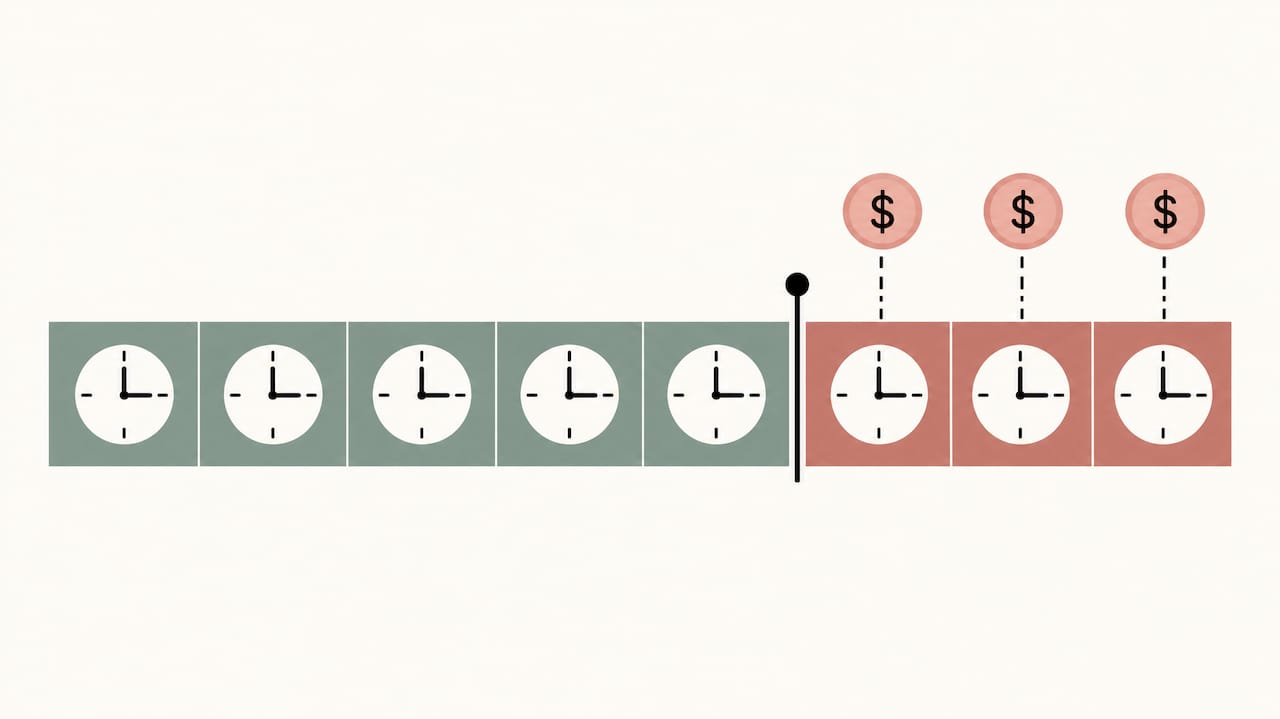
Pro Tip: Ask for the hard end time in writing along with the exact per-hour overtime rate, then calculate what an overrun would cost before you negotiate anything else.
4. Cancellation, rescheduling, attrition and force majeure clauses
Cancellation clauses may operate on a sliding scale, with penalties that depend on when you cancel. Check the contract for the applicable terms. Read the tiers carefully, because the financial exposure compounds fast as your event date approaches.
Force majeure clauses excuse performance when an event becomes impossible, not merely inconvenient or more expensive. Courts draw a sharp line between “impossible” and “commercially impracticable,” and that distinction decided the outcome in Sanders v Edison Ballroom, where the court enforced a force majeure clause and required a refund because a government order made the event illegal to hold. The ruling confirms that courts enforce clear contract language as written rather than rewriting ambiguous terms in the planner’s favor.
Legal guidance on post pandemic meeting contracts recommends negotiating force majeure language that explicitly covers commercial impracticability, not just outright impossibility, and tying that clause to any attrition waivers in the same agreement.
- Ask for a mitigation duty requiring the venue to document resale efforts if you cancel.
- Request rebook credits that apply any resold revenue against your cancellation penalty.
- Tie force majeure to attrition clauses so one triggering event waives both obligations together.
5. Insurance, certificates of insurance, additional insureds and indemnity
Most venues require general liability coverage with minimum limits, often around $2,000,000 per occurrence and in aggregate, a figure reflected in the model facility use agreement from Cache County, which also names the county as an additional insured. The certificate deadline depends on the agreement, so confirm the exact date rather than assuming “before the event” means the week of.
Additional insured status gives the venue coverage under your policy for claims connected to your event, which is standard and reasonable. The negotiation point is scope: your indemnity obligation should cover claims arising from your own negligence, not the venue’s.
- Confirm the certificate deadline in writing, since late submission can delay or void your booking.
- Limit indemnification to your own acts, excluding the venue’s negligence or pre-existing property conditions.
- Request a sample certificate from your insurer early so there’s time to fix formatting issues before the deadline.
APEX Contracts lists indemnification and insurance among its standard accepted practices, giving you a benchmark for what reasonable language looks like versus what one-sided drafting looks like. For a deeper breakdown of what coverage you actually need, our guide to event insurance types walks through common policies and limits.
6. Vendor access, alcohol rules and third-party vendor restrictions
Many venues require exclusive use of in-house caterers, florists, or AV providers, while others allow outside vendors subject to approval and proof of insurance. Confirm which model applies before you book any vendor, since switching from an approved outside caterer to your preferred choice after signing can trigger a contract amendment or added fee.
Alcohol service usually requires a banquet license held by the venue or caterer, and state resources like Virginia ABC outline how those licenses work and who bears compliance responsibility. Corkage fees apply when you bring your own wine or spirits, and they vary widely by venue.
- Get the approved vendor list in writing, including any credentialing requirements for outside vendors.
- Confirm load-in and load-out windows, since narrow timeframes can force rushed setups or costly early-access fees.
- Ask about rigging restrictions, especially for draping, signage, or hanging installations that require ceiling access.
7. Cleanup, damage deposits, security and overtime enforcement
Damage deposits are usually refunded within 7 to 14 days after the event, pending inspection. Ask what the inspection process looks like and whether you get a copy of any damage documentation before funds are withheld.
Security requirements vary: some venues mandate their own security staff at your cost, while others let you hire a licensed third party. Either way, get the staffing ratio and hourly cost in writing before you budget for it.
- Request the inspection checklist the venue uses before releasing or withholding your deposit.
- Confirm who schedules security and whether the venue’s rate includes a markup over the vendor’s direct cost.
- Ask for photo documentation as a condition of any damage charge, not just a verbal claim.
A detailed logistics timeline attached to your contract, like the one in our event logistics checklist, makes disputes over cleanup and overtime far easier to resolve because everyone agreed to the windows in writing beforehand.
8. ADA compliance, permits, assignment and termination language
Venues typically handle structural accessibility (ramps, restrooms, elevators), while organizers are responsible for accessible signage, seating arrangements, and communication accommodations for guests. Confirm this division in writing rather than assuming the venue covers everything ADA-related.
Permits and licenses, from fire marshal approvals to outdoor amplified sound permits, are sometimes the venue’s responsibility and sometimes yours. If the contract is silent, add language assigning responsibility explicitly rather than discovering the gap shortly before your event.
- Clarify ADA responsibilities for signage, seating, and accommodations separate from structural access.
- Confirm who files for permits, with a deadline and a backup plan if approval is delayed.
- Review assignment and termination clauses, since a venue sale or management change can affect your booking terms.
APEX Contracts includes ADA and assignment among its recommended clause categories, which is a useful cross-check against whatever draft lands on your desk.
9. Negotiation checklist: what to request before you sign
Walk into every venue negotiation with a prioritized list rather than a mental checklist. The strongest leverage points, in order:
- Request an itemized sample invoice from a past comparable event to surface hidden fees.
- Add a mitigation duty requiring the venue to document resale efforts if you cancel.
- Define a hard end time with an explicit per-hour overtime rate written into the contract.
- Limit additional insured language to claims arising from the venue’s own negligence.
- Negotiate rebook or credit clauses that reduce penalties if your event moves rather than cancels.
Sample redline language to propose: replace vague overtime terms with “overtime billed at $X per hour, pre-approved in writing,” and replace broad indemnification with “organizer indemnifies venue for claims arising from organizer’s negligence, excluding venue’s own negligence or that of its agents.”
Before releasing your deposit, confirm your pre-sign packet includes a site plan, vendor contact list, run-of-show windows, and insurance certificates all attached as exhibits.
Pro Tip: Attach every verbal promise your sales contact made to you as a written exhibit, since anything not in the signed document legally does not exist.
10. How a turnkey production partner approaches venue contracts
We review every venue agreement the same way: coordinate insurance, vendor credentialing, and logistics under one accountable process instead of leaving each piece to chance. We coordinate logistics and insurance details to help address potential issues before they arise. Operational details like these get resolved through coordination; anything touching liability caps or indemnity scope goes to legal review first.
— Tyler
FAQ
How do I get out of a wedding venue contract?
Review the cancellation clause for your specific timing window, since penalties typically scale as the event date approaches. Some contracts include a mitigation duty requiring the venue to attempt to resell your date, which can reduce what you owe if they succeed.
Can you give me an example of an event contract?
A government facility agreement, like Cache County’s Event Center Facility Use Agreement, shows a complete structure with itemized fees, deposit schedules, and insurance requirements. It’s a useful reference for seeing how rental fees, damage deposits, and cancellation terms are typically organized.
Can you provide an example of a venue clause in a contract?
A force majeure clause typically states that either party may terminate without penalty if a government order or other unforeseeable event makes performance illegal or impossible. The ruling in Sanders v Edison Ballroom shows how courts interpret that exact kind of language when a venue and client dispute a refund.
What does “venue” mean in legal terms?
In a contract, “venue” refers to the defined physical space and scope covered by the agreement, which should be described precisely or attached as a site plan. Legal resources like Cornell’s contract overview explain how defined terms function to control what each party is actually obligated to provide or use.
Which tools help me track contract deadlines and vendor documents?
Project management platforms built for event planners can centralize deposit due dates, vendor insurance certificates, and contract milestones in one place. A comparison of project management tools for event planners breaks down options suited to tracking these moving pieces across a single event or multiple bookings.
Sources
- APEX Contracts Accepted Practices
- COVID-19: Legal Strategies for Association Meetings
- Sanders v Edison Ballroom LLC,
- Cache County Fairgrounds/Event Center Facility Use Agreement
Where we hand off the contract headaches
Reviewing venue contracts clause by clause takes time most marketing and event teams don’t have, especially when a launch or activation involves multiple vendors, venues, and overlapping deadlines. Our turnkey model puts one accountable partner behind design, fabrication, staffing, AV, catering, and venue sourcing, so contract review, vendor insurance, and logistics coordination happen under a single point of contact instead of across a dozen disconnected threads.
That single-accountability structure is why brands like Porsche, Audi, and the Natural Diamonds Council bring us in for product launches, conferences, and private events: fewer handoffs and fewer contract gaps. If you’re planning a brand activation, conference, or private event and want a partner who handles the fine print alongside the creative execution, visit King Sixteen to start the conversation, or explore our private events services to see how we scope a project from first call to final walkthrough.