Lock your venue and top-line budget first. Everything else in your event logistics plan flows from those two decisions. Once those are confirmed, use this master checklist to assign owners, set deadlines, and keep every operational area moving in parallel.
Your instant action checklist (start here):
- Confirm venue availability and sign a hold agreement
- Set a working budget with a contingency line to accommodate unexpected costs
- Draft an operational brief: peak headcount, session count, AV scope
- Identify your logistics lead (separate from your client or account manager)
- Build a shared drive as your central location for all documents
- Create a vendor shortlist with primary and backup contacts for each category
- Open a master timeline with milestone dates assigned to named owners
- Schedule your first site walkthrough soon after venue confirmation
The UNLV Event Planning Checklist PDF is a solid fillable template to adapt for your own master document. The sections below expand every phase with tables, templates, and day-of scripts your production team can use without guesswork.
Table of Contents
- Your printable master event logistics checklist
- 6+ months out: strategy, budget, and venue lock
- 3–4 months before: vendor confirmations, AV specs, and registration
- 1–2 months before: walkthroughs, staffing plan, and final confirmations
- 1 week before: final checks, packing, and payment prep
- 1 day before and load-in: staging, rehearsal, and pre-event brief
- After the event: teardown, vendor closeout, and reporting
- Detailed logistics checklists by operational area
- Budget line-items, payment schedule, and contract checklist
- Permits, insurance, safety, and contingency planning
- Agency templates and annotated examples
- Key Takeaways
- What most planners get wrong about logistics
- King Sixteen produces events so your team doesn’t have to manage logistics alone
- Useful sources and downloadable templates
Your printable master event logistics checklist
This one-pager is designed to be printed, pasted into a shared doc, or imported into a project management tool. Assign an owner and status to every row before your first team meeting.
| Logistics Area | Key Task | Owner | Status |
|---|---|---|---|
| Venue | Confirm hold, sign contract, collect COI | Event Director | |
| Budget | Build line-item budget with contingency | Finance Lead | |
| Vendors | Issue SOWs, collect signed contracts | Logistics Lead | |
| AV / Production | Finalize spec sheet, confirm power map | AV Lead | |
| Catering / F&B | Confirm menu, dietary needs, service flow | F&B Coordinator | |
| Transportation | Book shuttles, confirm parking plan | Transport Lead | |
| Staffing | Build role matrix, assign shifts | Staffing Manager | |
| Permits / Insurance | Collect COIs, file permits | Operations Lead | |
| Registration / Comms | Open RSVP, send save-the-dates | Marketing Lead | |
| Contingency | Draft emergency plan, weather backup | Event Director | |
| Post-Event | Schedule survey, set reporting deadline | Account Manager |
Treat logistics as a cross-functional program with named owners, clear KPIs, and a single source of truth. Every row above should live in one shared document the whole team references, not in separate inboxes. For corporate-scale events, the SEVEN corporate logistics checklist is a useful model for expanding this table with supplier management and reporting fields.
6+ months out: strategy, budget, and venue lock
The decisions you make in this phase determine the quality and cost of everything that follows. Venue choice alone sets the majority of your logistical constraints: loading dock access, power capacity, ceiling heights, parking, and load-in windows are all venue-dependent. For larger events, logistics planning should begin several months in advance, and for multi-venue or large-scale productions, six months or more is the realistic minimum.
Start with an operational brief before you touch a vendor quote. Define peak headcount, the number of concurrent sessions, AV scope (LED walls, rigging, live streaming), and any special requirements like outdoor structures or branded fabrication. That brief clarifies procurement needs and prevents scope creep later.
| Milestone | Action | Deadline |
|---|---|---|
| Operational brief | Define headcount, sessions, AV scope, special requirements | Week 1 |
| Venue shortlist | Site visits, capacity checks, load-in window review | Week 2–3 |
| Venue contract | Sign hold agreement, confirm deposit terms | Week 4 |
| Budget model | Build a line-item budget with an appropriate contingency reserve | Week 3–4 |
| Vendor categories | Identify AV, catering, transport, staffing, fabrication needs | Week 4–6 |
| Permit research | Identify noise, alcohol, temporary structure permit lead times | Week 4–6 |
Pro Tip: Ask the venue for their load-in schedule template on your first site visit. Venues that manage multiple events often have strict access windows, and discovering a conflict six weeks out is far easier to resolve than discovering it on setup day.
3–4 months before: vendor confirmations, AV specs, and registration
This phase is about converting your shortlist into signed agreements and your operational brief into technical specifications. Every vendor should have a statement of work (SOW) in place before you move into the final two months.
Vendor confirmation checklist:
- Issue SOWs to all primary vendors (AV, catering, transport, staffing, rentals, signage)
- Collect signed contracts and certificates of insurance from each vendor
- Assign primary and backup contacts for every vendor category
- Confirm arrival windows and load-in sequencing with venue operations
- Stagger vendor arrival windows by at least 30 minutes for vendors sharing the same loading dock
AV and production spec sheet items:
- Power map: circuits, amperage, and dedicated drops by zone
- Rigging points: weight limits, attachment hardware, and clearance heights
- Patch list: audio channels, video feeds, and signal routing
- Backup equipment: spare projectors, cables, wireless mic packs
- Internet: dedicated bandwidth for production, separate from attendee Wi-Fi
Registration and communications timeline:
- Send save-the-dates and open RSVP portal
- Confirm hotel room block and cut-off date with preferred properties
- Set RSVP close date (typically 3–4 weeks before the event)
- Begin attendee communications cadence: confirmation emails, agenda previews
For event staffing process guidance at this stage, assign your logistics lead now, not on event day. That person’s sole job is operational decisions, separate from client management.
1–2 months before: walkthroughs, staffing plan, and final confirmations
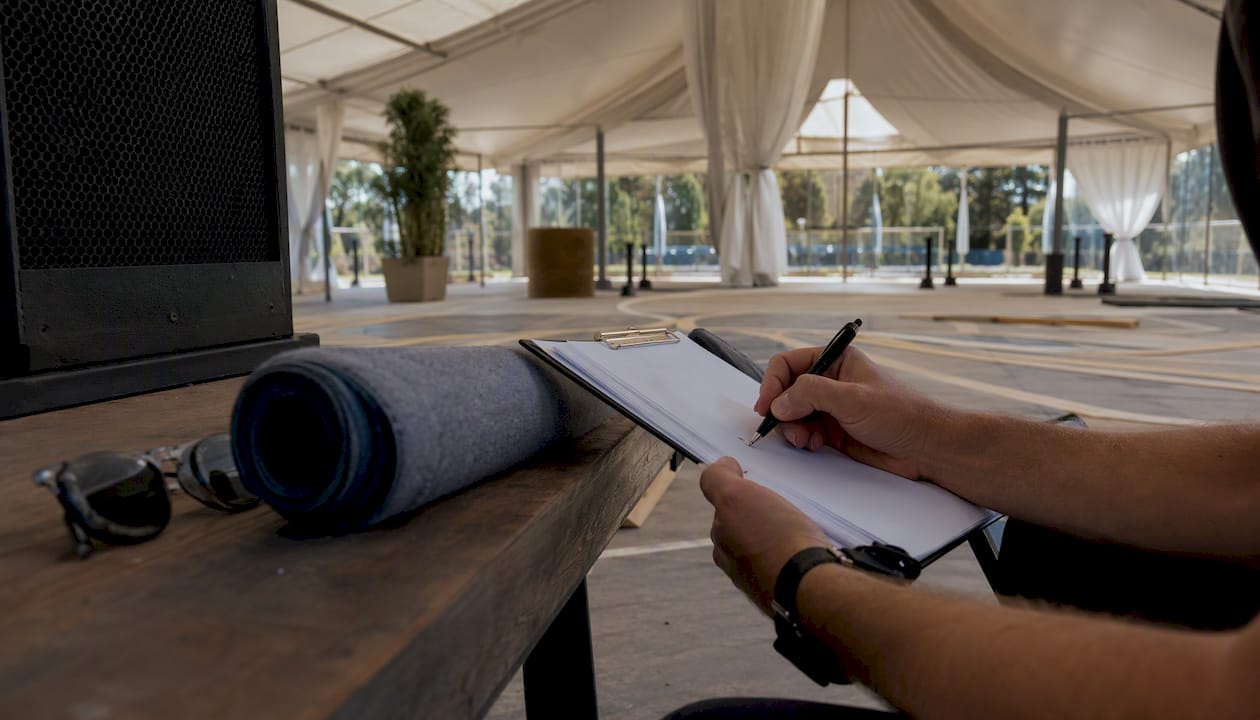
Site-visit checklists that capture physical layout, seating, and equipment placement reduce day-of surprises significantly. Schedule your final walkthrough with the venue operations manager, your AV lead, and your logistics lead present at the same time. Walk every access point, confirm egress widths, and photograph anything that differs from the floor plan on file.
Staffing matrix essentials:
Build a role matrix that lists every position, the assigned person, their shift window, and their direct supervisor. Roles to assign include: event director, logistics lead, registration manager, AV operator, F&B supervisor, transport coordinator, and floor staff. Each role needs a printed copy of the run-of-show and a radio or communication channel assignment.
Final confirmations checklist:
- Update floor plan with confirmed furniture, staging, and AV positions
- Verify all vendor permits and COIs are on file
- Confirm shuttle routes, parking marshal assignments, and accessible drop-off points
- Finalize dietary accommodation list with catering
- Confirm accessible restroom locations and ADA-compliant routes are clear
- Distribute draft run-of-show to all department leads for review
1 week before: final checks, packing, and payment prep
Seven days out is when operational discipline separates smooth productions from chaotic ones. Your job this week is confirmation, not planning.
48–72 hour vendor reconfirmation protocol:
- Call or email every primary vendor to confirm arrival time, access point, and contact name
- Reconfirm shuttle and transport schedules with drivers and dispatch
- Verify catering delivery windows and kitchen access with venue
- Confirm AV crew call time and equipment staging location
Final packing list:
- Production: gaffer tape, cable ties, power strips, label maker, toolkit
- Registration: badge stock, lanyards, scanners, printed guest list (backup), pens
- Emergency supplies: first aid kit, rain ponchos, extension cords, backup batteries
- Signage: directional signs, sponsor panels, wayfinding arrows
Payment and invoice checklist:
- Prepare payment envelopes for vendors requiring day-of cash or check
- Confirm wire transfers or ACH payments are scheduled for net-due invoices
- Print a payment schedule with vendor name, amount, due date, and payment method
- Set aside petty cash for incidentals (tips, last-minute supplies)
1 day before and load-in: staging, rehearsal, and pre-event brief
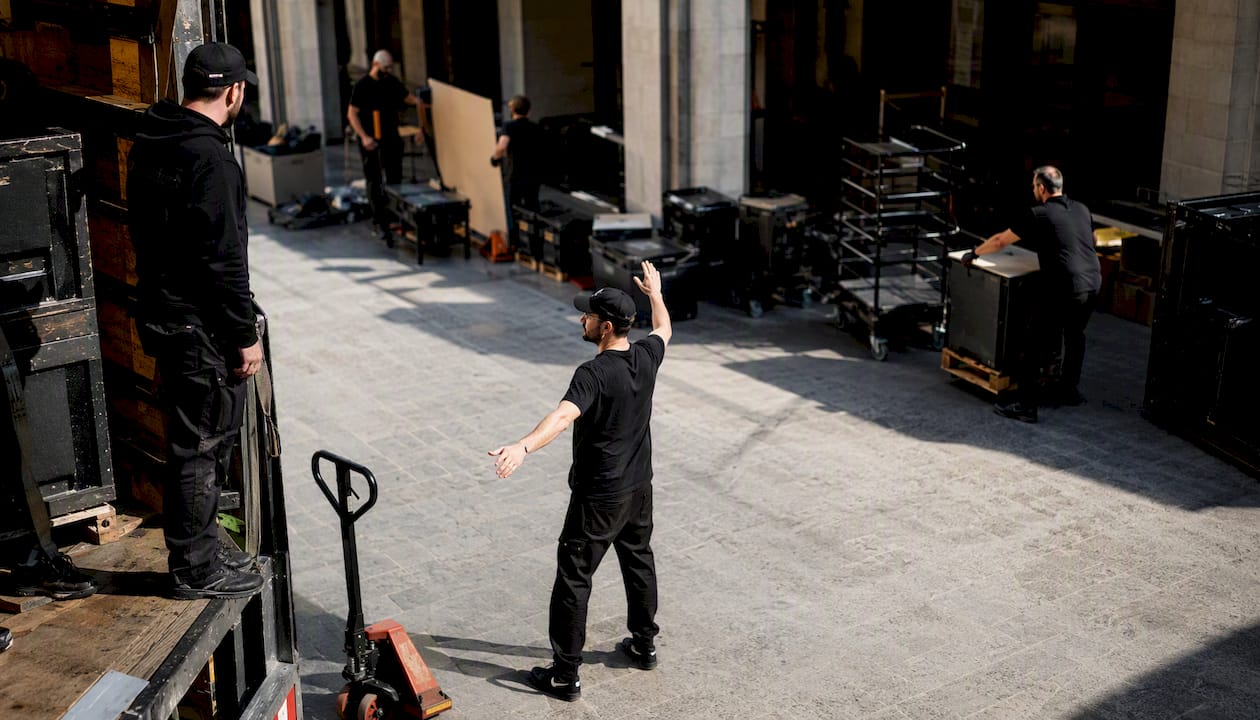
The day before is your last real opportunity to catch problems before they become guest-facing failures. Confirm load-ins 48 hours out, distribute a master timeline, and organize morning setup and briefings so every crew member arrives knowing exactly where to go and what to do first.
| Load-In Task | Responsible Party | Time Window | Notes |
|---|---|---|---|
| Venue access opens | Venue Operations | Per contract | Confirm dock and freight elevator access |
| AV crew load-in | AV Lead | First window | Rigging and power before furniture |
| Furniture / rentals delivery | Logistics Lead | After AV rough-in | Confirm placement against floor plan |
| Catering equipment delivery | F&B Supervisor | Per venue kitchen schedule | Confirm cold storage access |
| Signage and branding install | Branding Lead | After furniture set | Photograph final placement |
| Technical rehearsal | AV Lead + Event Director | 2–3 hours before doors | Full cue-to-cue, mic checks, video playback |
| Staff briefing | Event Director | 60–90 minutes before doors | Distribute run-of-show, radio channels, emergency contacts |
Technical rehearsal cue sheet essentials:
Run every cue in sequence: house lights, welcome video, microphone handoffs, presentation transitions, and any live streaming or recording triggers. Test backup equipment. Confirm the AV operator has a printed cue sheet, not just a digital one.
After the event: teardown, vendor closeout, and reporting
Strike is as operationally demanding as load-in, and it is where most teams lose discipline. Sequence teardown the same way you sequenced load-in: AV strikes first, then furniture and rentals, then catering equipment, then signage.
Teardown and site-return checklist:
- Photograph the venue before any furniture moves (documentation for damage disputes)
- Strike AV and production equipment first to clear the stage and rigging points
- Confirm rental company pickup windows and have a lead present for each pickup
- Walk the venue with the operations manager before releasing the space
- Collect all event materials: signage, branded items, leftover supplies
Invoice reconciliation:
Process same-day payments for vendors requiring immediate settlement. For net-30 invoices, log receipt date and due date in your payment tracker the same evening. Flag any discrepancies between the contracted amount and the invoice total before the vendor leaves the site.
Post-event reporting timeline:
- Send attendee survey within 24 hours while the experience is fresh
- Compile attendance data, check-in rates, and session participation within 48 hours
- Deliver a first-pass budget reconciliation to the client within 5 business days
- Complete a full post-event report, including vendor performance notes, within 2 weeks
Post-event data collection and reporting is where you build the case for next year’s budget and identify the operational improvements that make the next event run better.
Detailed logistics checklists by operational area
| Area | Key Checks | Owner | Common Gaps |
|---|---|---|---|
| Venue | Load-in dock access, power map, ceiling heights, egress widths, storage rooms | Logistics Lead | Freight elevator conflicts, insufficient power circuits |
| AV / Production | Patch list, rigging weight limits, backup equipment, internet bandwidth | AV Lead | No dedicated production internet, missing backup mics |
| Catering | Dietary tracking, delivery windows, kitchen access, service flow, cleanup | F&B Supervisor | Late delivery, no allergen documentation |
| Transport | Shuttle windows, parking marshal positions, accessible drop-off, hotel block | Transport Lead | Unmarked pickup points, no marshal at overflow lot |
| Accessibility | ADA route from parking to venue, accessible seating blocks, restroom proximity | Operations Lead | Blocked accessible routes during load-in |
| Technology | Event app setup, attendee Wi-Fi SSID and password, virtual participation links | Tech Lead | Insufficient bandwidth for hybrid attendance |
| Staffing | Role matrix, shift handoffs, radio assignments, break schedule | Staffing Manager | No documented handoff protocol between shifts |
| Branded merchandise | Delivery timeline, storage at venue, distribution point, leftover inventory plan | Logistics Lead | Late delivery, no designated storage area |
For branded merchandise logistics, including delivery timelines and bulk item handling, this guide on branded merchandise for events covers sourcing and distribution planning in detail.
Georgia Tech’s event planning checklist is a useful reference for venue-specific operational items, including load-in logistics and required approvals that apply to institutional and campus-hosted events.
Budget line-items, payment schedule, and contract checklist
Budget surprises at events almost always trace back to one of three causes: missing line items, vague contract language, or a deposit schedule that wasn’t tracked. Build your budget before you issue a single RFP.
| Budget Category | Typical Allocation | Payment Terms | Contract Item to Confirm |
|---|---|---|---|
| Venue rental | — | balance due prior to event | Load-in/out windows, overtime rates |
| AV / Production | — | balance due on delivery | Backup equipment included, crew overtime |
| Catering / F&B | — | partial deposit, balance post-event | Dietary accommodation process, service ratio |
| Staffing | 10–15% of total | Net-15 post-event | Overtime rates, cancellation terms |
| Transportation | 5–10% of total | balance due day-of event | Cancellation window, fuel surcharge |
| Permits / Insurance | 2–5% of total | Paid at filing | Lead times, required documentation |
| Contingency | 10–15% of total | Reserved | Trigger conditions for release |
Treat contingency as a scenario-based buffer, not a rounding error. A 10–15% reserve tied to specific risk triggers (weather, vendor failure, attendance overage) gives you a defensible number to present to clients and a clear protocol for when to use it.
Contract checklist for every vendor:
- Signed SOW with scope, deliverables, and exclusions clearly defined
- Cancellation and force majeure terms
- Certificate of insurance (COI) naming your organization and the venue as additional insured
- Confirmed load-in and load-out windows in writing
- Payment schedule with due dates and accepted payment methods
Permits, insurance, safety, and contingency planning
Permit lead times vary by city and venue type, but most require more runway than planners expect. Start this research in the 6-month phase, not the 6-week phase.
Permits to research early:
- Noise permits: required for outdoor events with amplified sound; lead times range from 2 to 8 weeks depending on the municipality
- Temporary structure permits: required for tents, stages, and elevated platforms; often require engineer-stamped drawings
- Alcohol permits: state and local requirements vary; some require 30–60 days for approval
- Fire marshal approval: required for events above certain occupancy thresholds; confirm with the venue
Insurance items to collect from every vendor:
- General liability COI (minimum $1M per occurrence is standard for most venues)
- Additional insured endorsement naming your organization and the venue
- Workers’ compensation certificate for any vendor bringing crew on-site
- Liquor liability if the vendor is serving alcohol
Emergency response plan:
- Designate a medical point of contact and confirm AED locations with the venue
- Document evacuation routes and assign floor wardens for each zone
- Create a weather contingency plan for outdoor elements: move-inside threshold, tent anchoring specs, cancellation decision timeline
- Share the emergency plan with all department leads at the pre-event briefing
Agency templates and annotated examples
These templates are adapted from King Sixteen’s production workflow and are designed to be handed directly to onsite leads. Scale the timing buffers up or down based on event size: add 15 minutes per 500 attendees to every major transition.
Sample run-of-show (annotated):
| Time | Cue | Owner | Notes |
|---|---|---|---|
| early morning | Venue access opens | Logistics Lead | Confirm dock and freight elevator with venue ops |
| morning arrival window | AV load-in and rough-in | AV Lead | Power and rigging before furniture |
| morning arrival window | Furniture, rentals, catering equipment | F&B + Logistics | Stagger arrivals by 30 min to avoid dock conflicts |
| late morning arrival window | Signage and branding install | Branding Lead | Photograph final placement for client record |
| afternoon arrival window | Technical rehearsal | AV Lead + Director | Full cue-to-cue; test all backups |
| afternoon arrival window | Staff briefing and radio check | Event Director | Distribute run-of-show, assign channels |
| mid-afternoon | Doors open | Registration Lead | Badge scanners live, welcome signage confirmed |
| mid-afternoon arrival window | General session | Event Director | 10-min buffer built in before keynote |
| early evening arrival window | Networking / meal service | F&B Supervisor | Notify director immediately if service runs behind |
| evening | Event close / strike begins | Logistics Lead | AV strikes first; photograph venue before moving furniture |
Staffing matrix template:
| Role | Assigned Person | Shift | Supervisor | Radio Channel |
|---|---|---|---|---|
| Event Director | [Name] | Full day | Client | Ch. 1 |
| Logistics Lead | [Name] | Full day | Event Director | Ch. 1 |
| AV Lead | [Name] | Load-in through strike | Logistics Lead | Ch. 2 |
| Registration Manager | [Name] | 2 hrs pre-doors through close | Logistics Lead | Ch. 3 |
| F&B Supervisor | [Name] | Delivery through cleanup | Logistics Lead | Ch. 2 |
| Transport Coordinator | [Name] | Pre-event through post-event | Logistics Lead | Ch. 3 |
Vendor tracker (sample rows):
| Vendor | Category | Contact | Arrival Window | Entrance | Vehicle Count | COI on File |
|---|---|---|---|---|---|---|
| [Caterer Name] | F&B | [Name / Phone] | morning arrival window | Loading Dock B | 2 vans | Yes |
| [AV Company] | AV / Production | [Name / Phone] | early morning arrival window | Freight Elevator | 1 truck | Yes |
For a deeper look at step-by-step event staffing and shift handoff protocols, the King Sixteen staffing guide covers role assignments and volunteer management in detail.
Key Takeaways
A complete event logistics plan locks venue and budget first, assigns named owners to every operational area, and runs a 48-hour confirmation protocol before every major phase.
| Point | Details |
|---|---|
| Start with venue and budget | These two decisions set every downstream logistical constraint; lock them before issuing any vendor RFP. |
| Plan well in advance | For events with a large number of attendees, logistics planning should begin several months before the event date. |
| Assign a dedicated logistics lead | One person owns real-time operational decisions on event day, separate from client or account management. |
| Use a single source of truth | All documents (run-of-show, vendor tracker, load-in sheet) live in one shared drive the whole team references. |
| King Sixteen handles it end-to-end | For brands that need agency-grade production, King Sixteen manages venue, AV, staffing, and logistics turnkey. |
Two actions to take within 24 hours:
- Lock your venue or open your venue search with a confirmed budget range
- Create your vendor load-in sheet in a shared drive and share it with your logistics lead today
What most planners get wrong about logistics
The conventional wisdom says logistics is a checklist problem. Get the right list, check the boxes, done. After producing events for brands like Porsche, Audi, and Churchill Downs, the reality is different: logistics is a sequencing problem, and the sequence is almost always broken by one thing — shared access points.
Loading docks are where events fall apart. Two vendors arrive at the same time, one blocks the freight elevator, and suddenly your AV crew is standing in a parking lot while your technical rehearsal window closes. The fix is not a better checklist. It is a staggered arrival schedule with 30-minute buffers between every vendor sharing the same access point, confirmed in writing 48 hours out. That one protocol prevents more day-of chaos than any other single practice.
The second thing planners underestimate is the cost of a vague contingency line. “We’ll figure it out” is not a contingency plan. A real contingency plan names the trigger (weather moves outdoor elements inside), the decision-maker (event director calls it by 6 AM day-of), and the pre-arranged fallback (indoor overflow space already confirmed with venue). Build that specificity into your planning at the 3-month mark, not the night before.
Pro Tip: Print your run-of-show and vendor contact list. Every department lead should have a physical copy on event day. Phones die, apps crash, and Wi-Fi fails at the worst possible moment.
King Sixteen produces events so your team doesn’t have to manage logistics alone
When the production complexity outgrows what an internal team can manage, King Sixteen steps in as a full production partner. We handle venue sourcing, AV and staging, staffing, catering coordination, branded fabrication, and day-of logistics through a trusted vendor network built over years of high-stakes productions.
For brands that need things done right and without margin for error, our turnkey model means one point of contact, one production team, and zero operational gaps. Whether you’re producing a product launch or a large-scale brand activation, we bring the same agency-grade rigor to every phase: from the first operational brief through final vendor reconciliation.
Contact King Sixteen to discuss your next event and get a production scope built around your specific logistics requirements.
Useful sources and downloadable templates
| Resource | Type | Best Used For |
|---|---|---|
| UNLV Event Planning Checklist PDF | Fillable PDF | Master checklist starting point; adapt fields for your event type and headcount |
| Georgia Tech Special Events Checklist | Web checklist | Venue-specific operational items, load-in logistics, and required approvals |
| UT Dallas Pre-Planning Checklist | Web checklist | Site-visit documentation, physical layout, and equipment placement |
| Dryfta Event Logistics Guide | Guide | Timeline planning, operational brief structure, and 10 week planning framework |
| Abastio Event Logistics Planning Guide | Guide | Vendor arrival sequencing, load-in sheet fields, and 48-hour confirmation protocol |
| Abastio Day-of Coordination Checklist | Checklist | Morning briefing steps, command station setup, and day-of communications plan |
| Loopyah Event Logistics Guide | Guide | Cross-functional ownership, KPIs, contingency budgets, and post-event reporting |
| SEVEN Corporate Event Logistics Checklist | Checklist | Corporate-scale pre-event, event-day, and post-event phases with supplier management |
How to use these resources:
- The Complete Guide On Event Logistics for Planners in 2026
- Event Logistics Planning Guide for Organizers | Abastio
- Event Day-of Coordination Checklist | Abastio
- Event Logistics: The Complete Event Planning & Management Guide
- [[PDF] Event Planning Checklist](https://www.unlv.edu/sites/default/files/page_files/27/GetInvolved-EventPlanningChecklist.pdf)
- Event Planning Checklist | Special Events - Georgia Tech
- Pre-Planning Checklist | Event Planning Guide | UT Dallas
- Event Logistics Checklist for Large Corporate Events | SEVEN