A secure, centralized event asset storage strategy combines regional warehousing, a live inventory portal, and tactical on-site containers to cut costs, eliminate day-of-event surprises, and protect brand assets across every activation. That hybrid model is the recommendation you should build toward, regardless of program size.
The core components to implement now:
- Regional storage hub: A climate-controlled warehouse within driving distance of your primary event markets, handling receipt, maintenance, and kitting
- Inventory portal with role-based permissions: Live stock visibility, reservations, and automated paperwork for every team member who touches assets
- Fulfillment and kitting workflow: Pick/pack, labeling, and pallet manifests prepared before assets leave the warehouse
- Secure transportation: Chain-of-custody documentation from warehouse to venue and back
- On-site temporary storage: Portable steel containers placed at the venue for multi-day events or high-turnover activations
Get these five elements working together and you will spend less time chasing missing crates and more time focused on the experience itself.
Key Takeaways
A hybrid model combining regional warehousing, a live inventory portal, and on-site containers gives event and trade-show managers the centralization, security, and flexibility needed to protect brand assets and reduce day-of-event risk.
| Point | Details |
|---|---|
| Use a hybrid storage model | Combine regional warehousing with on-site containers for programs that span multiple event types and timelines. |
| Require a live inventory portal | Portals with role-based permissions and RFID support reduce manual counting errors and speed reconciliation significantly. |
| Define SLAs before the first shipment | Damage-reporting windows, fulfillment lead times, and surge-capacity terms must be in writing before assets leave your hands. |
| Plan for cost drivers early | Short-notice fulfillment, seasonal surcharges, and over-storage are the three most common and avoidable budget leaks. |
| King Sixteen for integrated programs | When fabrication, logistics, and on-site operations need a single point of accountability, King Sixteen’s turnkey model reduces vendor handoffs and event-day risk. |
Table of Contents
- What event asset storage and event inventory management actually cover
- Types of event asset storage solutions and when each fits your program
- How an event inventory management portal works in practice
- Security, climate control, and maintenance standards you should require
- How storage integrates with shipping, staging, and on-site operations
- How to pick an event asset storage partner: questions to ask and red flags to avoid
- Typical cost drivers and timelines for event asset storage options
- On-site containers vs. regional warehouses: which one fits your situation
- When to bring an experiential agency into your asset-storage strategy
- The part of event storage advice most guides get wrong
- King Sixteen brings logistics discipline to your next activation
- Sources
What event asset storage and event inventory management actually cover
The industry uses “event asset storage” and “event inventory management” interchangeably, but they describe different scopes. Storage is the physical custody of assets between events. Inventory management is the full operational lifecycle: receipt, cataloging, maintenance, kitting, transport, on-site access, return, and reconciliation.
The asset classes in scope are broader than most teams initially plan for: trade show booths and modular components, shipping crates and road cases, AV equipment and rigging hardware, branded furniture and carpet, signage and graphics, promotional giveaways, and staging carts. Each category has different handling, environmental, and documentation requirements.
The lifecycle stages matter because costs and risks concentrate at specific handoffs. Receipt and cataloging set the baseline condition record. Maintenance and repair happen between events. Kitting and pick/pack determine whether the right items ship to the right venue. On-site access determines how fast your team can set up. Return and reconciliation close the loop and catch damage before it compounds.
One U.S.-specific note: most professional storage partners will require a certificate of insurance naming them as an additional insured, and you should declare replacement values for high-value assets in writing before the first shipment.
Types of event asset storage solutions and when each fits your program
No single model works for every program. The right choice depends on event frequency, asset value, geography, and how much lead time you typically have.
- Regional exhibit warehousing: Dedicated storage at a provider’s facility, usually with climate control, inventory management, and kitting services. Best for national trade-show circuits and brands with a consistent annual calendar. Providers like STAR Exhibits (via Startranet) and Taylor Exhibits operate dedicated exhibit storage with client portals built in. Skyline Exhibits similarly offers regional service centers that store, maintain, and ship booth properties on behalf of clients.
- Dedicated exhibit storage with a fabricator: Your booth builder stores what they built. Convenient for single-booth programs, but watch for limited portal access and inflexible fulfillment terms.
- On-site portable containers: Steel containers delivered and positioned at the venue. Mini Warehousing and 1-800-PACK-RAT both offer this model, which eliminates trips to remote storage and gives crews immediate access during multi-day events. Best for festivals, outdoor activations, and events with high asset turnover between show days.
- Third-party logistics (3PL) and fulfillment: A 3PL handles pick/pack, kitting, and outbound shipping from a shared warehouse. Strong fit for giveaway-heavy programs or brands shipping collateral to dozens of regional events simultaneously.
- Short-term portable storage: Flexible rental durations, repositionable between events. 1-800-PACK-RAT’s commercial storage model lets you store, transport, or reposition containers as your schedule shifts.
The decision signal is usually event frequency. If you run more than six events per year with the same core asset set, regional warehousing pays for itself quickly. Fewer events, or events with highly variable asset sets, often favor a 3PL or portable container model.
How an event inventory management portal works in practice
The workflow runs in a straight line when the portal is set up correctly: item receipt at the warehouse triggers cataloging and a condition photo. From there, your team reserves specific items for an upcoming event, the warehouse picks and packs to a manifest, ships with an automated delivery note, and the on-site team signs off at bump-in. After the event, assets return, are inspected against the original condition record, and any damage is logged before the item goes back into available inventory.
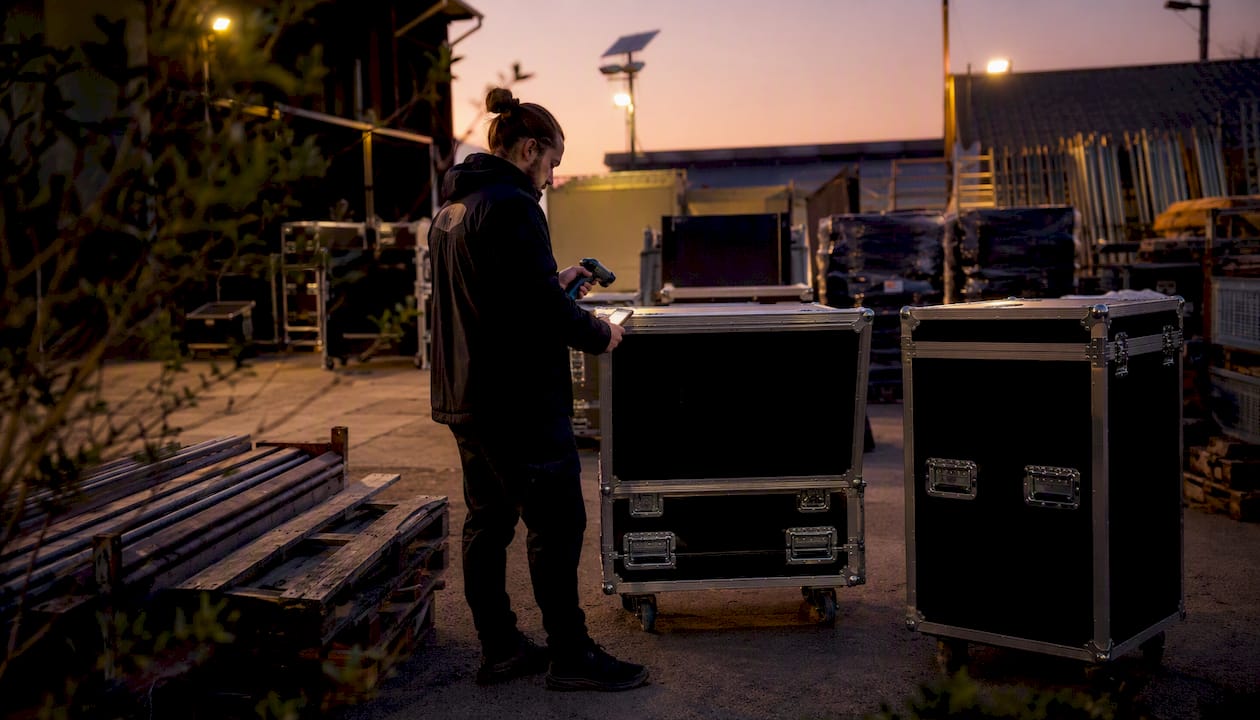
SM2ARTA describes this as live inventory across warehouses and venues with automated delivery notes and damage reports, specifically designed to eliminate the stock surprises that derail day-of-event setup. Icon1’s Event Express takes an enterprise approach, adding asset lifecycle reporting, reservation and rental management, consolidated order management, and analytics to identify which assets are underutilized across a program.
Portal features worth requiring from any provider:
- Live stock counts with location-level visibility (warehouse bay, in-transit, on-site)
- Role-based permissions so regional teams can reserve but not delete records
- Barcode or RFID support for fast physical counts
- Automated packing manifests and delivery notes
- Damage reporting with photo upload and timestamp
- Audit trail for every transaction
RFID-based systems can make physical inventories up to 90% faster than manual counting, which matters significantly when multiple vendors share a venue or when you need a fast turnaround between show days.
Virtual Venue’s 2025 guide argues that integrating asset management inside a venue digital twin creates real-time coordination across operations, reduces transport waste, and positions teams for broader automation as the technology matures. That integration is still emerging for most U.S. programs, but the direction is clear: asset data and venue operations will converge. Connecting your event data strategy to your inventory portal now puts you ahead of that curve.
Security, climate control, and maintenance standards you should require
Physical security at a storage facility should not be negotiable. Before signing with any provider, confirm these measures are in place:
- Gated perimeter access with keycard or PIN entry
- 24-hour camera coverage of all storage bays and loading docks
- On-site security personnel during business hours, monitored alarm after hours
- Crate-level locks and sealed rack positions for high-value assets
- Visitor log and escort policy for non-staff access
Climate control matters more than most teams realize until something goes wrong. AV electronics, fabric graphics, vinyl wraps, and foam-core displays all degrade in uncontrolled humidity and temperature. Require climate-controlled bays for any asset you would not leave in a hot car. King Sixteen’s AV and lighting services include proper handling protocols for sensitive equipment, which is a useful benchmark when evaluating third-party storage partners.
RFID-enabled inventory systems can reduce physical count time by up to 90%, according to UBI Events, making them particularly valuable when fast asset turnover or multi-vendor venues demand rapid reconciliation.
Maintenance expectations should be written into your storage agreement. Require inspection on receipt and on return, a damage quarantine process with photo documentation, and a scheduled refurbishment window before peak season. Ask for the provider’s SLA on damage reporting: 24 hours is reasonable, 72 hours is the outer limit before you lose the ability to dispute carrier liability. For insurance, request a sample certificate and confirm the coverage limit covers your highest-value single asset, not just an aggregate.
How storage integrates with shipping, staging, and on-site operations
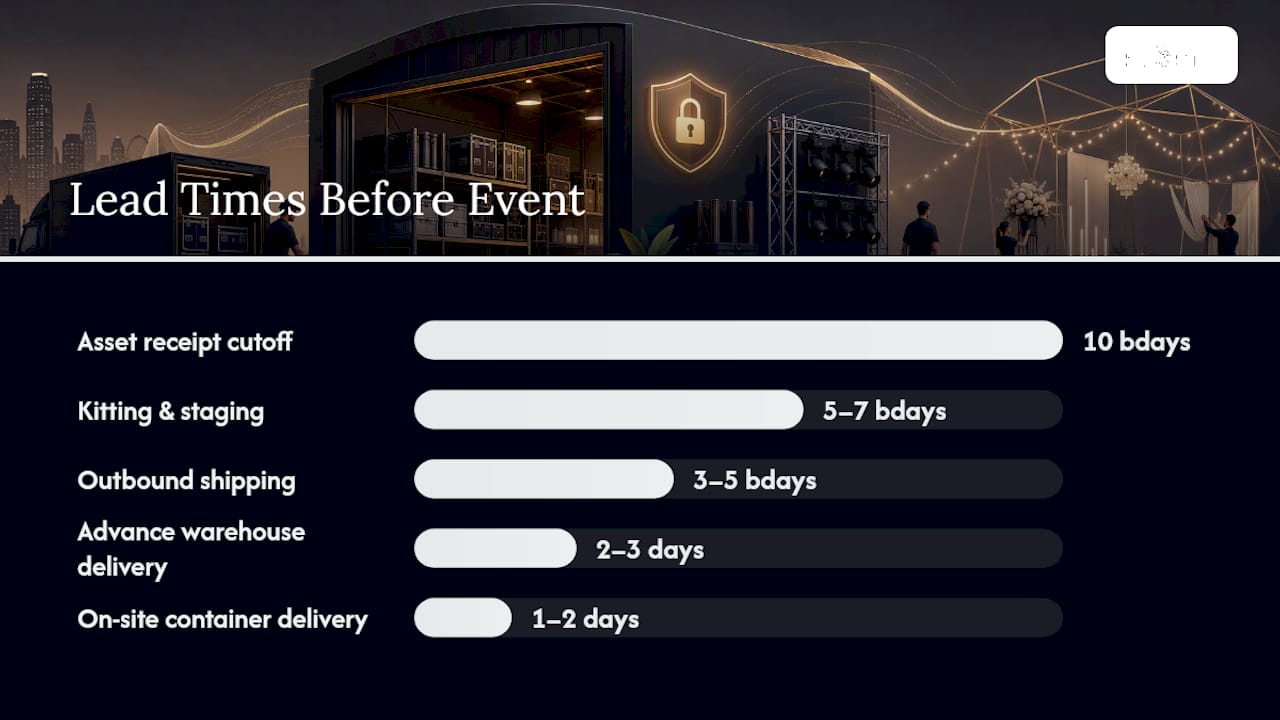
The handoffs between storage, shipping, and on-site setup are where programs lose time and assets. A clear timeline prevents most of those losses.
| Milestone | Typical Lead Time Before Event |
|---|---|
| Asset receipt cutoff at warehouse | 10 business days |
| Kitting and staging complete | 5–7 business days |
| Outbound shipping (ground, domestic) | 3–5 business days |
| Freight delivery to advance warehouse | 2–3 business days before show open |
| On-site container delivery | 1–2 days before event start |
| Return pickup / outbound from venue | Within 24–48 hours of show close |
| Return receipt and reconciliation | 3–5 business days after return |
Every shipment should travel with a packing manifest, a delivery note signed by the receiving party, and a damage report form. Chain-of-custody sign-offs at each handoff create the paper trail you need if a claim arises.
Kitting best practice: label every case with the event name, destination, and a case number that maps to the master manifest. Color-coded labels by booth section (graphics, hardware, AV, giveaways) cut bump-in time significantly. Pallet manifests should list case weights and dimensions so the venue freight team can plan dock scheduling.
Pro Tip: Build a one-page bump-in checklist that lists every case number, its contents, and the setup sequence to optimize your planning with a streamlined content calendar. Laminate it and tape it to the first case that comes off the truck. Your on-site team will thank you on day one.
Staffing coordination is the other half of this equation. When storage and event staffing are planned together, you avoid the common failure of assets arriving before anyone is credentialed to receive them.
How to pick an event asset storage partner: questions to ask and red flags to avoid
Use this checklist during supplier calls and RFPs:
- Does the provider offer a client-facing inventory portal with live stock and role-based permissions? No portal means manual spreadsheets and phone calls, which scale poorly.
- Can they demonstrate kitting and pick/pack workflows? Ask for a sample manifest and a walkthrough of how a multi-item event kit is assembled and verified.
- What is their regional footprint? A single warehouse in one city is a liability for a national program. Ask for service center locations relative to your top five event markets.
- Do they offer climate-controlled bays? Confirm the temperature and humidity ranges, not just the label.
- What are their insurance limits and SLAs? Get the coverage amount, the damage-reporting window, and the claims process in writing.
- Can they handle surge capacity? Ask what happens to your storage and fulfillment SLAs during peak trade-show season (January, March, June, October).
- Do they support RFID or barcode scanning? Manual counts at scale introduce errors. Providers using RFID tagging offer meaningfully faster and more accurate reconciliation.
- Can they provide client references in your industry? Case studies and a client list are the fastest credibility check.
Red flags: vague SLA language (“we’ll do our best”), no portal access or portal access that requires a support ticket to update records, inability to show regional routing options, and insurance coverage that excludes transit. If a provider cannot produce a sample packing manifest on request, that tells you everything about their operational maturity.
For deeper guidance on event planning criteria for senior stakeholders, the evaluation framework applies directly to storage partner selection.
Typical cost drivers and timelines for event asset storage options
Pricing varies widely, but the drivers are consistent across providers. Understanding them lets you compare quotes on equal terms.
| Cost Driver | Regional Warehousing | On-Site Container Rental | 3PL / Fulfillment |
|---|---|---|---|
| Base storage rate | Per pallet or cubic foot per month | Daily rental + delivery fee | Per pallet per month |
| Handling / pick-pack | Per line item or per hour | Included in container access | Per order or per item |
| Kitting | Per kit, quoted separately | Not typically offered | Per kit, quoted separately |
| Transportation | Per shipment, distance-based | Delivery + pickup flat fee | Carrier rate + handling |
| Seasonal surcharge | Peak season (Q1, Q4) | Event-season demand pricing | Peak-season rate |
| Inventory minimum | Often applies | Not typically | Often applies |
Scheduling shipments at least ten business days out eliminates most of that cost.
On-site containers alter the cost math in a specific way: you pay a delivery fee, a daily rental rate, and a pickup fee, but you eliminate the labor cost of repeated trips to a remote warehouse during a multi-day event. For a three-day festival with a large crew, that trade-off often favors the container.
Practical cost-saving moves: consolidate return shipments rather than shipping cases individually, optimize pack density to reduce cubic footage billed, and run a quarterly audit to remove assets that have not been used in 12 months. Long-term over-storage is one of the most common and avoidable cost leaks in event programs.
On-site containers vs. regional warehouses: which one fits your situation
The choice is not either/or for most programs. It is a question of which model handles which part of your calendar.
On-site containers work best when:
- The event runs two or more days and crews need frequent access to assets
- The venue is remote or has limited freight access windows
- You are running a festival or outdoor activation where weather protection matters
- Asset turnover between show days is high (daily resets, giveaway restocking)
Alloy Storage describes on-site containers as a way to speed setup and teardown while keeping equipment secure and weather-tight for the full event duration. That operational anchor function is the core value proposition.
Regional warehouses work best when:
- Assets are stored for weeks or months between events
- You need kitting, maintenance, and refurbishment between activations
- Your program spans multiple cities and you want consolidated inventory management
- Per-day storage cost is a priority over on-site convenience
Scenario examples:
- Weekend festival: On-site container wins. Delivery the day before, immediate crew access, pickup the morning after. No trips to a warehouse 30 miles away.
- Two-week national roadshow: Regional warehouse with regional shipping hubs. Assets ship to each city, return to the nearest hub, and re-kit for the next stop.
- Annual trade-show circuit (10+ shows/year): Dedicated exhibit storage with a portal, kitting SLA, and advance warehouse delivery at each show. STAR Exhibits, Taylor Exhibits, and Skyline Exhibits all operate this model with regional service centers.
The honest answer for most mid-to-large programs: use a regional warehouse as the operational backbone and deploy on-site containers for specific events where venue access or asset turnover justifies the daily rate.
When to bring an experiential agency into your asset-storage strategy
Storage decisions become agency territory when logistics are load-bearing for the audience experience. If a crate arrives damaged, a graphic is missing, or the AV rack is not staged correctly, the brand takes the hit in front of the audience. That is when having an agency with operational accountability changes the outcome.
Bring an agency in when you are running complex multi-venue rollouts where vendor coordination across fabricators, shippers, and on-site crews creates real risk. The same applies to integrated fabrication and storage needs, where the team that built the assets also manages their care and deployment. Brand-sensitive launches, where asset condition directly reflects brand quality, are another clear trigger.
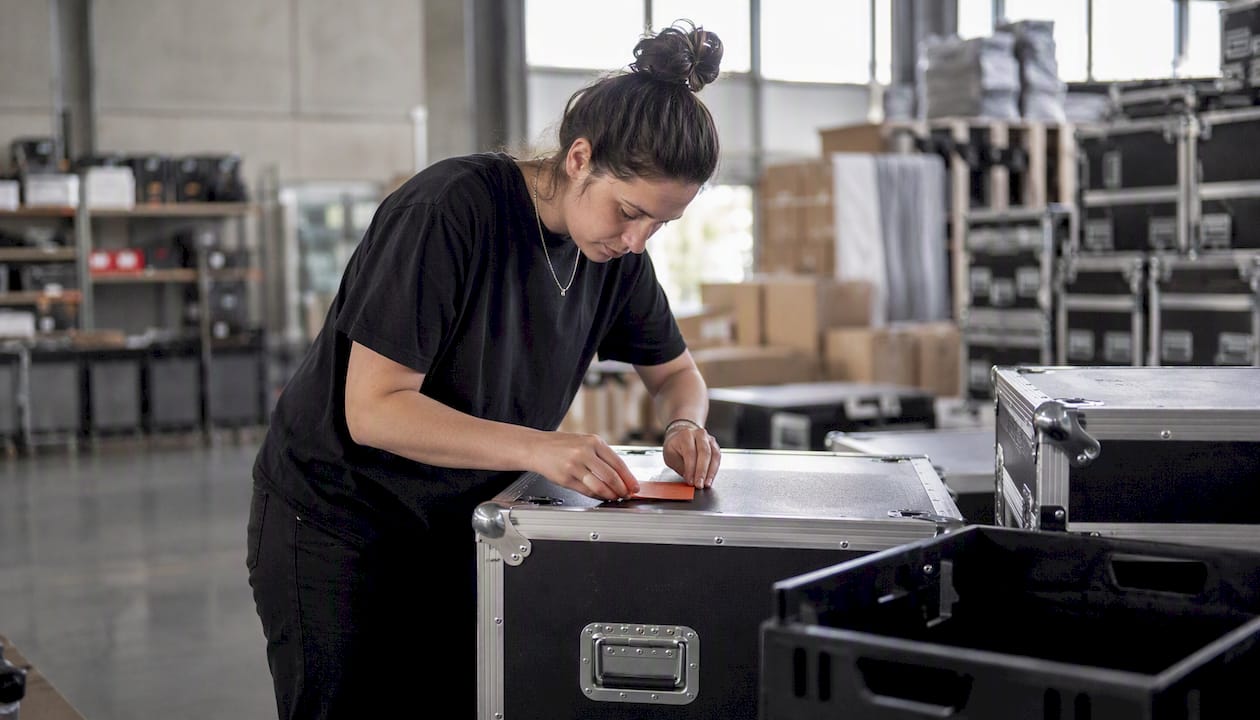
King Sixteen’s turnkey model covers design, fabrication, logistics, staffing, and AV through a single point of accountability. That structure reduces vendor handoffs, which is where most day-of-event failures originate. A rehearsed bump-in plan, QA on asset condition before the truck leaves the warehouse, and coordinated staffing handoffs are standard parts of how we approach a program.
For smaller programs, an ad-hoc consult on storage partner selection and logistics planning can be enough. For national circuits or multi-day flagship activations, full turnkey management, including storage coordination, is the model that protects the brand and the budget. Event branding and asset protection are two sides of the same operational decision.
The part of event storage advice most guides get wrong
Most articles on event asset storage focus almost entirely on the warehouse: square footage, climate control, security cameras. Those things matter, but they are table stakes. The real operational risk lives in the handoffs, not the storage itself.
A crate sitting in a climate-controlled bay is not a problem. The problem is the packing manifest that does not match what is actually in the crate, the damage report that never gets filed because no one owns the return inspection, and the portal that shows 12 units available when 4 are actually on-site at a show that closed last week. Those failures compound across a program and show up as budget overruns, last-minute rentals, and brand assets that look worn because no one scheduled refurbishment.
The advice most teams need is not “find a warehouse with good security.” It is: build the process discipline first, then find a storage partner whose systems support it. Require a portal before you sign. Define the SLA for damage reporting before the first shipment. Run a reconciliation audit 30 days into any new storage relationship to catch gaps before they become habits.
The other underrated lever is asset rationalization. An enterprise platform like Icon1’s Event Express surfaces that data through lifecycle reporting and analytics. Use it.
King Sixteen brings logistics discipline to your next activation
Managing event asset storage across a national program is a coordination problem as much as a storage problem. The brands that get it right treat logistics as part of the creative brief, not an afterthought.
King Sixteen manages the full operational chain for high-value brand activations: vendor-coordinated storage, pre-event asset QA, rehearsed bump-in plans, and on-site operations staffed by people who know what should be in every crate. Our clients at Porsche, Audi, and Ray-Ban do not want to spend the week before a launch chasing shipping confirmations. They want one call, one point of accountability, and a team that has done this before.
If your next activation involves custom fabrication, multi-venue logistics, or brand assets that cannot afford to show up damaged, talk to King Sixteen about what a turnkey approach looks like for your program.
Sources
When building your shortlist, evaluate providers across these categories:
- SM2ARTA™ — Event Material Planning & Asset Tracking Platform
- Event Asset Management Guide 2025 for Venues
- Your Portable Events + Entertainment Storage Solution - Mini Warehousing, Inc.
- UBI Events, for ensuring asset traceability
- Event Express Exhibit Asset Management | Scale Enterprise Events
On any provider’s website, prioritize three things: a visible client list or case studies, documented security and insurance coverage, and a portal demo or screenshot. A provider that cannot show you the portal before you sign is a provider whose portal is not ready for your program.