A single 10x10 inline booth typically costs several thousand dollars all in for a single show, while a 20x20 island booth can cost tens of thousands once you include design, drayage, and staffing. Booth size and build tier set the floor, but drayage, install and dismantle labor, and staffing headcount are what actually swing your final invoice. Before you sign anything, ask every vendor to break out drayage by hundredweight, labor by hour, and show services line by line.
TL;DR:
- Drayage costs can range from $80 to $250 per hundredweight, with minimum charges applying regardless of shipment size, significantly impacting budgets.
- Renting a small 10x10 booth generally costs between $5,000 and $12,000, while a large custom island can exceed $70,000, depending on build complexity and size.
- Buying a modular booth is cost-effective if used for at least three to four shows annually, with the break-even point typically after two to three years.
- Vendors often add surprise fees for crate storage, overtime labor, and last-minute services, so itemized quotes and clear policies are essential to avoid budget overruns.
- An experienced experiential agency can reduce costs by consolidating services into a single invoice, minimizing markups, and streamlining logistics and staffing.
Table of Contents
- What Does a Trade Show Booth Actually Cost?
- How Much Do Booths Cost by Size and Build Tier?
- Should You Rent, Buy Modular, or Build Custom?
- What Hidden Fees Catch Exhibitors Off Guard?
- How Do You Build a Trade Show Budget You Can Trust?
- How Do Experiential Agencies Control Trade Show Costs?
- Should Your Budget Chase Spectacle or Leads?
- Get a Single Invoice Instead of Eight Vendor Bills
- Sources
- FAQ
What Does a Trade Show Booth Actually Cost?
Every invoice you’ll ever get for a trade show boils down to seven categories, and knowing what belongs in each one is the difference between a budget that holds and one that blows up in month two of planning.
Space rental is the baseline. Show organizers charge per square foot, and rates vary by venue, city, and whether you’re a member of the sponsoring association. The XPONENTIAL 2026 exhibit space pricing tables show member rates running meaningfully below standard rates, and corner booths typically carry a premium of 10% to 30% over inline space because they offer two-sided visibility.
Design and fabrication splits into three tiers: rental (graphics and structure you return after the show), modular (owned components you reconfigure for different footprints), and custom (built for your brand alone). Rental packages for a 10x10 often land in the low thousands; custom architectural builds for larger footprints can run tens of thousands.
Drayage and freight confuse first-time exhibitors more than any other line item. Drayage is billed by hundredweight, or CWT, covering the labor to move your crates from the dock to your booth space and back. Rates in union markets typically range $80 to $250 per CWT in 2026, and most shows enforce a minimum charge even if your shipment is small.
Install and dismantle (I&D) labor is billed hourly, and many convention centers require union crews for anything beyond a simple pop-up. Rates and rules shift by market. Reading your show’s union labor requirements before you finalize a booth design saves you from paying overtime to fix a structure your own staff legally couldn’t assemble.
Show services cover electrical, carpet, internet, furniture rental, and lead retrieval hardware. The GES exhibitor budgeting guide treats these as a separate line from booth build costs, since they’re billed directly by the venue or general contractor and often surprise first-time exhibitors with their total.
Line items to track separately on every quote:
- Space rental (per square foot, plus corner premium if applicable)
- Design, fabrication, or rental of structure and graphics
- Drayage and outbound freight
- I&D labor hours
- Electrical, internet, carpet, furniture, lead retrieval
- Crate storage and empty-crate handling
- Staff travel, lodging, and per diem for a 3-day show
Staffing and travel round out the budget. A realistic estimate for a 3-day show includes flights, three to four nights of lodging, and per diem for each staffer, plus any temporary brand ambassadors you hire locally.
How Much Do Booths Cost by Size and Build Tier?
Benchmarking your number against real market ranges is the fastest way to know if a vendor quote is fair or inflated. Industry data from Level Booths’ 2026 breakdown and Steadfast Displays point to consistent bands once you separate rental from custom builds.
- 10x10 (100 sq ft): costs generally range within a moderate price band for portable or rental setups
- 10x20 (200 sq ft): modular and architectural builds fall within mid-tier price bands
- 20x20 island (400 sq ft): prices vary widely depending on build complexity and AV integration
- Large custom island (600+ sq ft): generally represents high investment levels with multi-story or heavily engineered structures often at premium costs
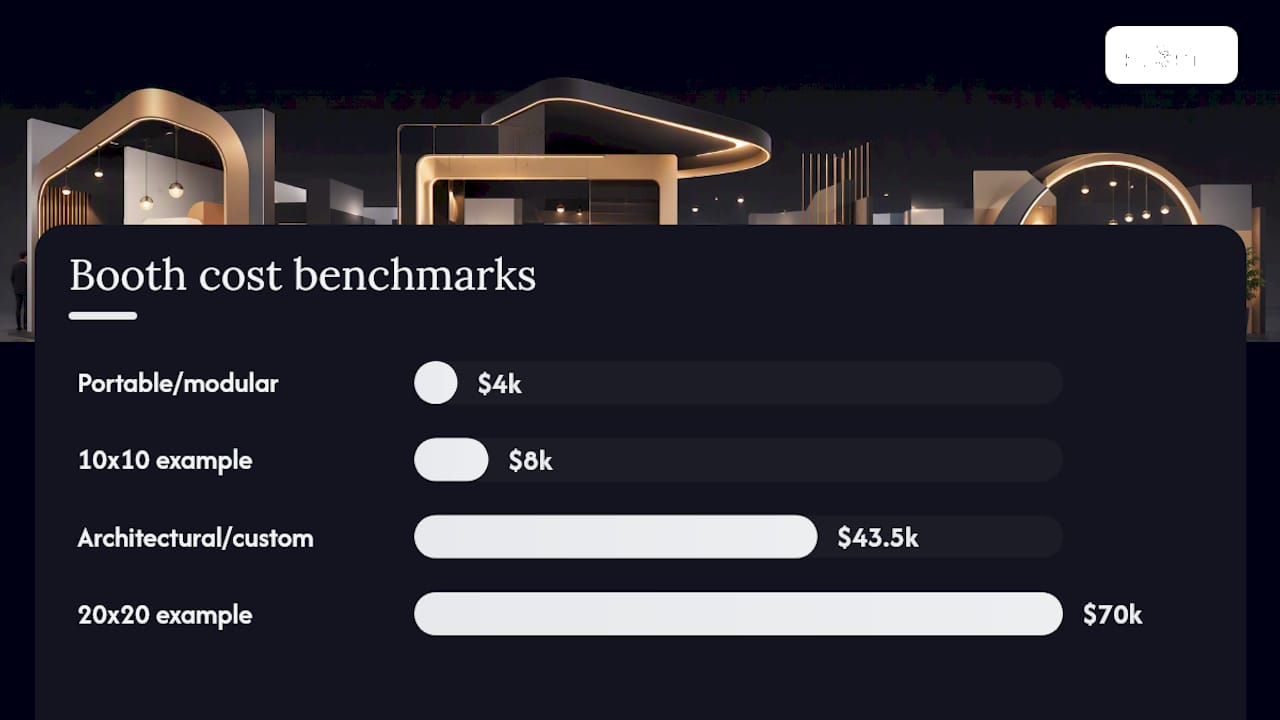
Portable and modular systems generally land in the $2,000 to $6,000 per-show range for smaller footprints, according to ShowHero’s 2026 benchmarking data, while architectural and full custom builds commonly run $12,000 to $75,000 or more once size and complexity scale up.
Run the square-foot test to sanity-check any quote: divide your all-in total by your booth’s square footage. A 10x10 booth landing at $8,000 works out to $80 per square foot. A 20x20 island at $50,000 works out to $125 per square foot, reflecting the added engineering, AV, and staffing that larger footprints demand.
Two worked examples show how these totals get built. A regional distributor renting a 10x10 pays roughly $2,500 for space, $2,000 for a rental structure and graphics, $1,200 for drayage and I&D, $800 for show services, and $1,500 for one staffer’s travel: about $8,000 total. A consumer brand running a 20x20 island custom build pays $12,000 for space, $30,000 for fabrication, $6,000 for drayage and freight, $8,000 for I&D labor, $4,000 for show services, and $10,000 for a four-person staffing and travel budget: roughly $70,000 total.
Should You Rent, Buy Modular, or Build Custom?
The math on owning versus renting comes down to one formula: divide your total purchase price by the number of shows you’ll realistically use it for over its useful life.
- Set your amortization base. A $40,000 modular booth used across 30 shows amortizes to roughly $1,333 per show, per ShowHero’s program cost modeling. That number only covers hardware. Show services, freight, and staffing still get added on top of it, and those variable costs frequently exceed the amortized hardware line.
- Compare against rental cost per show. If renting an equivalent structure costs $3,000 to $5,000 every time, and you attend four or more shows a year, buying typically breaks even within two to three years.
- Weight the sensitivity factors. Storage fees, refresh cycles (graphics age faster than structure), and logistics complexity for larger builds all shift the break-even point. A booth that needs a full graphics refresh every 18 months effectively resets part of its amortization clock.
Common break-even horizons run three to six shows per year for modular systems. Below that frequency, renting almost always wins on cash flow, since you avoid storage fees and the capital outlay entirely.
What Hidden Fees Catch Exhibitors Off Guard?
Drayage minimums are the single most common budget shock. Shows charge a flat minimum, often $500 to $1,500, even if your shipment weighs a fraction of the threshold. A small exhibitor shipping two crates can pay the same drayage floor as one shipping ten.
Overtime labor is the second trap. I&D crews bill straight time during standard hours and premium rates, often one and a half to two times the base, for early mornings, evenings, or weekend moves. Booths that get scheduled for late-night installs because of dock congestion routinely blow past their labor estimate.
Crate and empty-crate storage fees round out the list. Venues charge to store your empty crates during the show and to retrieve them at teardown, and that fee is almost never itemized in the initial contractor kit you receive.
Other line items exhibitors regularly miss:
- Rush or expedited shipping fees when freight misses the advance warehouse deadline
- Booth cleaning and porter service, billed daily
- Last-minute AV rental when equipment breaks or a demo changes scope
- Electrical labor to run power beyond a basic outlet
Mitigation tactics work, and they’re not complicated. Lightweight fabric and modular systems can cut freight, drayage, and I&D costs by 40% to 60% compared with heavy architectural crates, according to Level Booths’ 2026 analysis. Shipping to the advance warehouse instead of direct to show site avoids rush freight surcharges. Consolidating shipments across multiple booth elements into one crate reduces per-piece drayage minimums. Choosing lighter materials at the design stage pays off every single show afterward, not just once.
Pro Tip: Insist on an itemized CWT calculation, a labor-hour estimate broken out from a flat “install fee,” and the venue’s exact crate storage policy before you sign any general contractor order form. Vague line items are where surprise charges hide.
How Do You Build a Trade Show Budget You Can Trust?
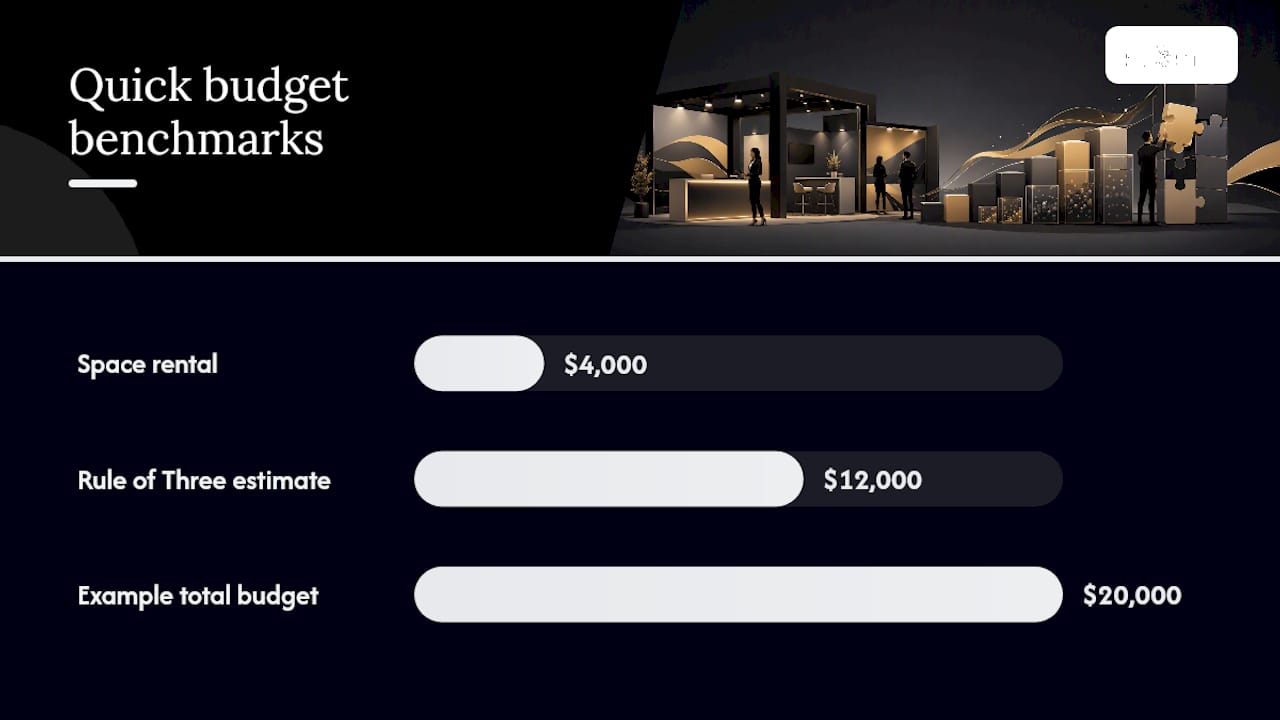
The Rule of Three is the fastest sanity check in the industry: take your space rental cost and multiply it by three to estimate your realistic all-in budget, a rule documented across multiple 2026 industry budgeting guides. A $4,000 space rental fee suggests a $12,000 total program cost once you add design, drayage, services, and staffing.
Build your per-show worksheet with these line items, in this order:
- Space rental (confirmed rate x square footage, plus corner premium)
- Design/fabrication or rental fee
- Drayage estimate (CWT rate x estimated weight, plus minimum check)
- I&D labor hours x confirmed rate
- Show services (electrical, internet, carpet, furniture, lead retrieval)
- Staffing and travel (per person x days, plus lodging)
- Contingency line at 10% to 15% of the subtotal
Set your ROI guardrail before the show, not after. If your all-in budget is $20,000 and your target cost per lead is $150, you need roughly 133 qualified leads to hit breakeven on a strict lead-gen basis. Tying your lead capture targets to your budget upfront keeps the finance conversation grounded instead of retroactive.
How Do Experiential Agencies Control Trade Show Costs?
King Sixteen is a high-end experiential marketing agency built for brands that treat their booth presence as a revenue driver, not a line-item expense. Some clients have relied on this model precisely because a fragmented vendor list is where most budget overruns start.
The turnkey structure is the mechanism that controls cost. King Sixteen handles design, fabrication, staffing, AV, catering, venues, logistics, and digital integration through a vendor network built over years, which means fewer separate invoices and fewer opportunities for one vendor’s delay to cascade into another vendor’s overtime charge.
Where the real savings show up:
- Consolidated shipping across all booth elements reduces drayage minimums
- A single accountable invoice replaces five to eight fragmented vendor bills
- Established vendor relationships avoid the markup a first-time exhibitor pays for rush orders
Internal teams handling their first show or two can often manage a straightforward 10x10 rental without outside help. Once you’re running a custom island build with AV integration and multi-city logistics, the coordination overhead alone usually justifies bringing in a managed partner.
Should Your Budget Chase Spectacle or Leads?
Here’s where I part with a lot of conventional booth advice: the biggest waste isn’t overspending on design, it’s spending on design without deciding what the booth is actually for. A flagship product launch at a national conference justifies real spectacle spend, because brand recall and executive meetings are the KPI, not cost per lead. A regional trade show where your buyer already knows your brand should run lean and let lead volume drive the math.
Before you approve any design concept, run it against three questions: Does this element drive a measurable KPI, or does it just look good in photos? Does the staffing plan match the traffic pattern, or are you overstaffed for a slow show floor? Would cutting this line item by half change attendee behavior at all? If you can’t answer clearly, you’re probably funding spectacle that no one is measuring.
— Tyler
Get a Single Invoice Instead of Eight Vendor Bills
King Sixteen is the alternative to piecing together drayage, fabrication, staffing, and AV across separate vendors yourself. Every reader who just worked through drayage minimums, crate storage fees, and overtime labor rates above knows exactly why that fragmentation is where budgets break.

Some agencies run design, fabrication, logistics, staffing, and AV integration through one vendor network and one point of accountability, so surprise charges get caught before the invoice, not after. Clients hire this model specifically for single-invoice accountability, faster timelines from concept to install, and a vendor network that avoids common markups.
If your next show involves a custom build, multi-city logistics, or a launch where the booth needs to do more than fill space, start the conversation with King Sixteen’s experiential marketing team and get a scoped quote before you lock in a floor plan.
Sources
FAQ
What Is a Realistic Trade Show Booth Cost for a 10x10?
A 10x10 booth typically costs $5,000 to $12,000 all in for space, rental structure, drayage, I&D, show services, and one staffer’s travel for a 3-day show.
What Is Drayage and Why Is It So Expensive?
Drayage is the fee for moving your crates between the loading dock and your booth space, billed by hundredweight at rates typically running $80 to $250 per CWT in union markets, often with a minimum charge regardless of shipment size.
Is It Cheaper to Rent or Buy a Trade Show Booth?
Renting is usually cheaper below three to four shows per year; buying a modular system tends to break even within two to three years once you exceed that frequency, based on amortizing the purchase price across your annual show count.
What Is the Rule of Three in Trade Show Budgeting?
The Rule of Three says to multiply your space rental cost by three to estimate a realistic all-in program budget, covering design, drayage, services, and staffing on top of the space itself.
Can an Agency Actually Lower My Booth Costs?
A turnkey agency like King Sixteen typically reduces costs through consolidated shipping and established vendor pricing, and it replaces multiple fragmented vendor invoices with one accountable bill, which cuts the coordination overhead that drives overtime and rush charges.
Recommended
- Exhibitor Manual First: Trade Show Union Labor Rules US Exhibitors