A production-ready green room setup means soft seating, mirrors with lighting, accessible power, bottled water and nonalcoholic drinks, secure access with credentialed entry, and a hot meal served two to three hours before performance. These aren’t preferences. They show up repeatedly in hospitality riders and venue tech packs, and we use the same checklist when we brief vendors on turnkey builds. The rest of this guide turns that single-line standard into a brief you can hand to any venue or agency.
TL;DR:
- A production-ready green room must include a comfortable seating area, illuminated mirrors, accessible power outlets, bottled drinks, and a hot meal two to three hours before performance.
- Confirm detailed equipment needs such as private bathrooms, refrigeration, waste removal, and power placement based on the size and purpose of the green room to avoid last-minute surprises.
- Order dedicated internet circuits at least two weeks in advance to ensure reliable connectivity for streaming and AV needs, as venues may require lead time for activation and bandwidth upgrades.
- Schedule catering delivery within the two to three hour window before showtime, and verify if outside vendors are permitted or if venue-approved caterers are mandatory.
- Assign clear roles and share detailed floor plans, technical, and hospitality requirements with venues and vendors at least two weeks prior to the event for smooth coordination and execution.
Table of Contents
- What belongs in every green room: furniture, hygiene, and hospitality
- Power, internet, and AV: the specs that prevent last-minute failures
- Catering timing and rider obligations before load-in
- Access control and meet-and-greet logistics buyers often underestimate
- Staffing and operations: roles that make the green room run
- How to brief the venue and vendors without gaps
- Why turnkey delivery changes how green rooms get built
- Ready to hand off your green room scope to one team
- FAQ
- Sources
What belongs in every green room: furniture, hygiene, and hospitality
Riders rarely leave room for interpretation, and that’s the point. When a touring act or keynote speaker’s team sends over requirements, they expect a clean, secure room for exclusive use, working mirrors, a clothes rack, and bottled water and snacks waiting on arrival. Washing and toilet facilities get specified too, often down to the number of outlets near the vanity.
Scale changes what you’re provisioning. A small dressing room for one to six people needs different equipment than a catering green room built for a full crew or cast. Here’s what to confirm before you sign off on either:
- Soft seating, a work surface, and at least one illuminated mirror or vanity station.
- A clothes rack, waste bins with removal service, and clean towels refreshed daily.
- Bottled water, nonalcoholic beverages, and coffee or tea available on request.
- Refrigeration and sink access when any food is stored or prepped on site.
- Private bathrooms and mini-fridges for higher-profile dressing rooms or headliners.
- Power outlets placed near seating and vanity areas, not just along a back wall.
Venue tech packs back up the scale distinction directly. One example shows a catering green room seating 35 people with refrigeration and two restrooms, while individual dressing rooms include private showers, TVs, and mini-fridges built for one or two occupants. Write every one of these items into the rider or venue brief by name. A vague line like “standard hospitality” gives a venue coordinator nothing to act on, and ambiguity is exactly what causes day-of scrambling. Our event production tips walk through how we translate rider language into a working production document.
Power, internet, and AV: the specs that prevent last-minute failures
Technical gaps rarely surface until someone’s trying to stream a press interview with no signal. Confirm data port locations and whether the venue offers a dedicated internet drop, since dedicated circuits commonly require two weeks’ lead time to activate. Ask about private SSID setup and what fees apply for additional bandwidth beyond baseline Wi-Fi.
Walk through these before load-in:
- Outlet counts and placement near makeup and vanity stations, not just the perimeter.
- Surge protection and extension cable runs mapped to actual furniture layout.
- Generator fallback confirmed for any outdoor or temporary structure.
- Monitor or IFB needs and mic lines for meet-and-greets or press access.
- Who on the venue side books stage audio access, and by what deadline.
For reference, one tech pack cites average speeds of 50 Mbps download and 75 Mbps upload as the baseline, with paid upgrades available. A nearby crew workflow guide from PHENYX covers similar prep steps for video production spaces, which overlaps closely with green room AV planning.
Pro Tip: Order your dedicated internet circuit the same day you confirm the venue, not the week of the event.
Catering timing and rider obligations before load-in
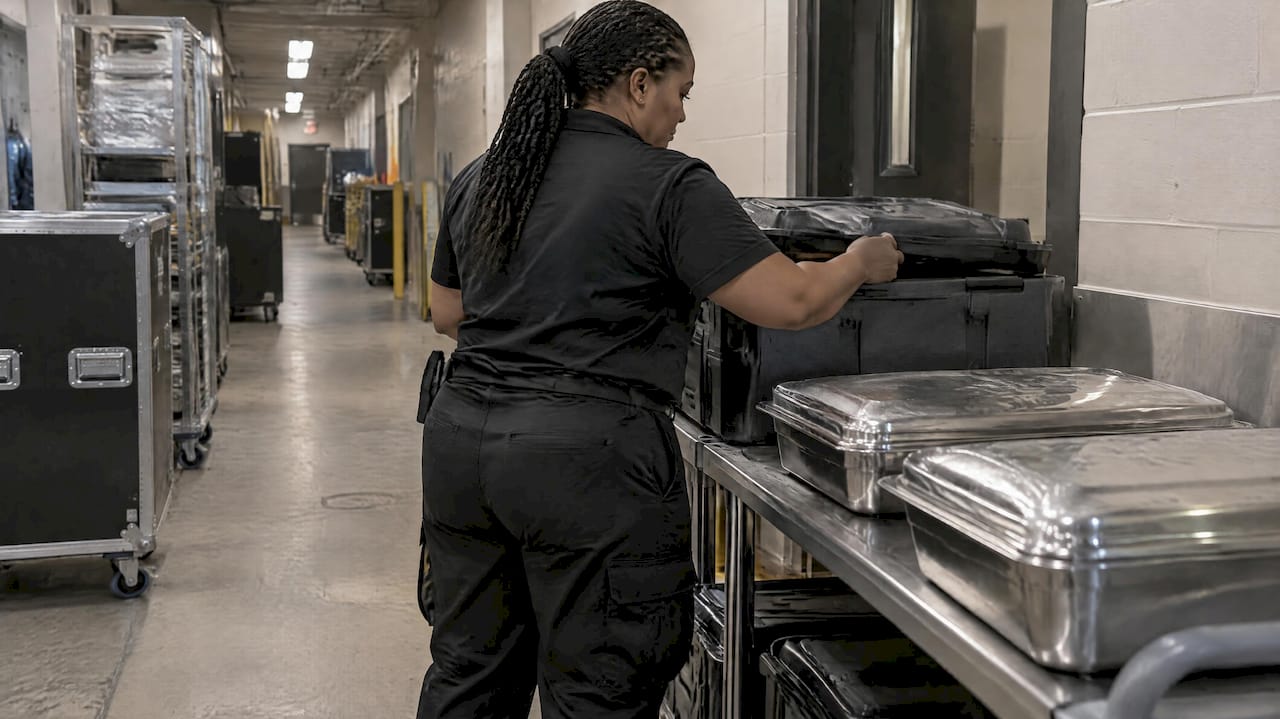
Food timing is one of the most specified items in any hospitality rider, and it’s one of the easiest things to get wrong on a tight schedule. The standard ask is a hot meal and nonalcoholic drinks for a specified headcount roughly two to three hours before performance, with at least one vegetarian option when requested. Some venues restrict on-site cooking entirely and require an authorized caterer, so confirm how equipment and refrigeration get handled before you build the timeline.
A practical confirmation sequence looks like this:
- Lock the headcount and dietary restrictions with the talent or speaker’s team.
- Confirm whether the venue requires a preapproved caterer or allows outside vendors.
- Schedule hot meal delivery for the two to three hour window before showtime.
- Flag any hotel or transportation clauses in the rider, if they fall within your scope.
- Reconfirm guest list and special requests 24 hours before load-in.
Touring riders sometimes bundle in accommodation requests alongside catering terms, and those only belong on your checklist if they’re part of the contracted scope.
Access control and meet-and-greet logistics buyers often underestimate
Layout and access control decide whether a meet-and-greet runs smoothly or turns into a bottleneck. Start by requesting a PDF floor plan with room dimensions and noting proximity to the stage and load-in doors, along with clear entry and exit routes for fast egress.
- Submit guest lists and credentialing data to the venue roughly 72 hours before the event so lanyards and wristbands can be prepared.
- Clarify who enforces credential checks, venue security or your own staff, before doors open.
- Separate ticketing for meet-and-greets often triggers additional staffing or security requirements once attendance passes about 20 guests.
- Watch for surcharges tied to confetti cleanup, plumbing misuse, or disposable plastics, since venue guidelines commonly list these as billable violations.
Write these terms into the contract up front. A surcharge that shows up on the final invoice is far more expensive to argue about than one you negotiated before signing.
Staffing and operations: roles that make the green room run
A well-equipped room still fails without the right people assigned to run it. At minimum, staff a hospitality lead or green room host, a production manager, a security or venue liaison, a catering lead, and a wardrobe or makeup runner. Each role needs defined responsibilities across load-in, preshow, performance, and strike, plus a contact list and escalation path written into the statement of work.
- Assign the hospitality lead to own all guest-facing requests from arrival to departure.
- Give the production manager authority over timeline changes and vendor coordination.
- Loop in security once meet-and-greet attendance exceeds roughly 20 guests.
- Confirm the catering lead’s delivery and breakdown windows against the meal timeline.
A sample day-of schedule might include a 2:00 PM arrival window, a 5:00 PM meal service, a 6:30 PM meet-and-greet, and strike beginning 30 minutes after the final guest departs.
Pro Tip: Build staffing ratios into the contract, not just a headcount, so coverage scales automatically when guest numbers shift.
How to brief the venue and vendors without gaps
The handoff document is where most green room plans succeed or fall apart. Send the venue a floor plan PDF, the hospitality rider, the technical rider, a load-in schedule, a guest list with credential types, and a day-of contact list.
- Share technical and AV requirements roughly two weeks ahead, since dedicated circuits and private networks need that lead time.
- Send hospitality details and guest lists about 72 hours out, matching standard venue intake windows.
- Confirm who receives catering deliveries, where perishables get stored, and who controls fridge access.
- Assign a single point of contact to sign off at strike, closing the loop on waste removal and equipment return.
Our event production workflow guide breaks this handoff process down further for teams managing multiple vendors at once.
Why turnkey delivery changes how green rooms get built
Coordinating a green room across a venue, a caterer, an AV vendor, and a staffing agency creates four separate points of failure. We run turnkey production specifically to collapse that into one accountable team, handling design, fabrication, staffing, AV, catering, and venue logistics through vendor relationships.
Our scope on a typical green room build includes the design brief, vendor coordination, a written statement of work, and day-of staffing, so nothing depends on a venue coordinator remembering a side conversation. A buyer managing a single, low-complexity event with an in-house team might handle this directly. Once meet-and-greets, media access, or multiple dressing rooms enter the picture, a single accountable partner removes most of the coordination risk.
— Tyler
Ready to hand off your green room scope to one team
We build green room provisioning into every experiential campaign and live event we produce, which means one contract covers design, catering, staffing, and AV instead of four separate vendor relationships. If your next activation needs backstage hospitality handled without the coordination headache, start a conversation with our team about scope and pricing.
| Service | What it covers |
|---|---|
| Turnkey Event Production | Design, staffing, AV, and vendor coordination under one contract |
| Hospitality & Operations | Green room provisioning, catering coordination, and day-of staffing |
| Custom Builds & Fabrication | Dressing room and backstage environment construction |
FAQ
What counts as a production-ready green room setup?
A production-ready green room includes soft seating, an illuminated mirror, accessible power, bottled water and nonalcoholic drinks, secure credentialed access, and a hot meal served two to three hours before performance. These items appear consistently across hospitality riders and venue tech packs rather than as optional extras.
How far in advance should we confirm catering for the green room?
Lock the headcount and dietary needs as soon as the guest list is final, then schedule the hot meal delivery for the two to three hour window before the performance begins. Reconfirm with the venue or caterer about 24 hours out to catch any last-minute changes.
When should we order dedicated internet for the green room?
Request dedicated circuits or private network activation at least two weeks before the event, since most venues can’t accommodate same-week requests. Confirm bandwidth expectations and any fees for upgrades beyond the venue’s baseline Wi-Fi.
What size green room do we need for a meet-and-greet?
Room size depends on guest count and whether it’s a private dressing room or a catering green room shared by a larger crew. Venues typically require additional staffing and credentialing once meet-and-greet attendance exceeds around 20 guests.
Should we hire an agency or manage green room setup in-house?
A small, single-vendor event can often be managed directly by an in-house team with a clear checklist. Once catering, AV, security, and staffing all need to coordinate around a meet-and-greet or press access, a turnkey partner handling the full scope under one contract reduces the coordination risk significantly.
Sources
- ATLANTA VICE Hospitality Rider 2026
- Hard Rock Live – Dressing rooms & hospitality tech pack
- Vancouver Civic Theatres — Venue guidelines 2026-27
Recommended
- Advantages of Turnkey Event Services for Planners
- Catering Cost per Person: What Event Planners Should Budget