Prioritize five activation formats: gamified lead-gen, immersive product demos, community or hospitality zones, AR and phygital experiences, and exclusive access moments. Each one maps to a distinct sponsor goal, from data capture to brand affinity to social amplification. The right pick depends on your objective, audience, and venue, and the detailed ideas, real examples, and measurement framework below will help you choose.
TL;DR:
- Focus activation formats on specific goals, such as lead generation, product demos, or social sharing, rather than appearance alone.
- Use quick, simple mechanics like badge-scan configurators and gamified kiosks for efficient data capture with measurable engagement rates.
- Prioritize low-tech, fast-to-deploy options like utility zones and hospitality lounges for immediate impact and budget efficiency.
- Ensure tech-driven activations are tested thoroughly beforehand and integrate seamlessly with existing event systems to avoid on-site failures.
- Align each activation with a clear KPI, and deliver comprehensive reports within a week to inform future sponsorship strategies.
Table of Contents
- Sponsorship Activation Ideas Organized by Sponsor Objective
- Sponsor Activation Examples From Sports, Festivals, and City Pop-Ups
- How to Design an Activation Sponsors Will Actually Approve
- Measuring Sponsorship ROI: KPIs and Reporting
- Budgeting, Permits, and Smart Shortcuts
- What a Turnkey Agency Brief Looks Like
- Legal and Compliance Considerations in Sponsorship Activations
- Technology and Platform Integration for Activations
- Post-Event Analysis and Activation Follow-Up
- Sustainability and Ethics in Sponsorship Activations
- Choosing Scale, Intimacy, and What Comes Next
- Let King Sixteen Handle the Execution
- Sources
Sponsorship Activation Ideas Organized by Sponsor Objective
The mistake most brands make is picking an activation because it looks impressive on a deck, not because it serves a specific goal. A step-and-repeat photo wall does not generate leads. A leaderboard game does not build long-term brand affinity. Match the format to the objective first, then get creative within that lane.
Here are the ideas worth pitching, grouped by what they actually accomplish.
For lead generation:
-
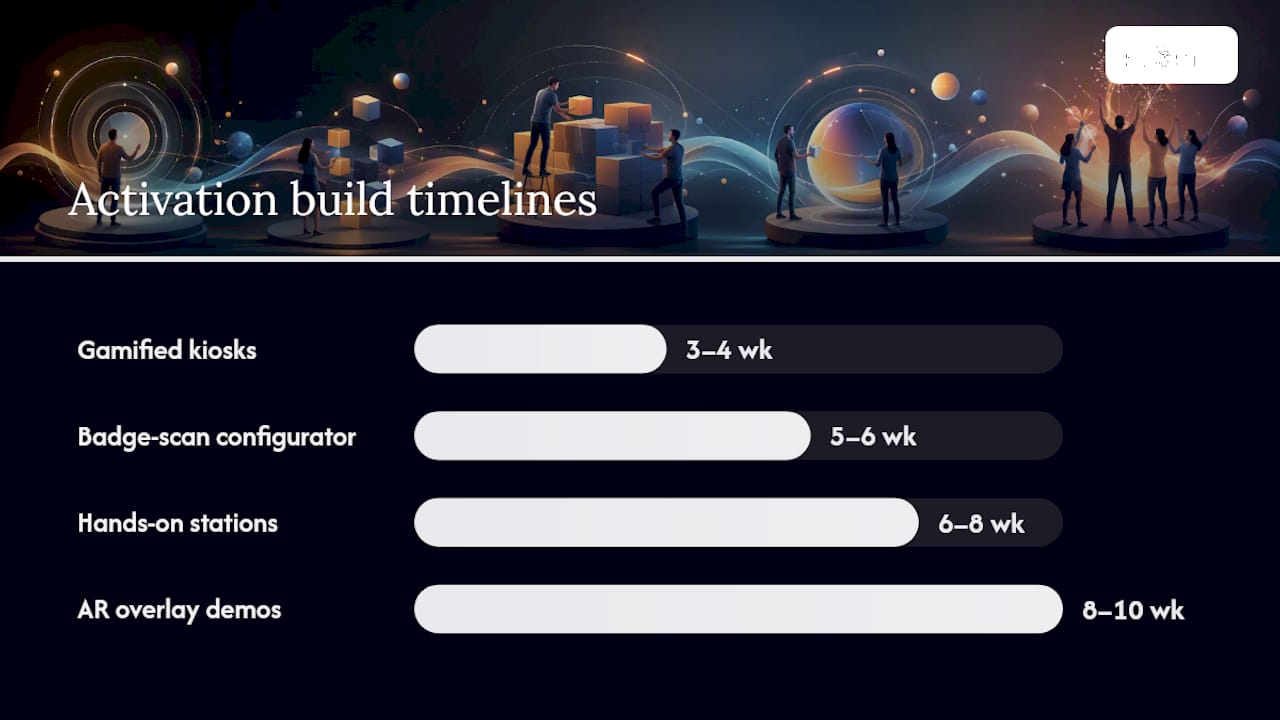
Gamified data capture kiosks. Attendees play a short game (spin-to-win, trivia, a skill challenge) and unlock a prize by entering contact information. This works because the game creates a value exchange that feels fair rather than transactional. Budget: low to medium. Timeline: 3 to 4 weeks for build and testing. Execution tip: cap gameplay at 60 to 90 seconds so lines move fast. Measurement: track completion rate and email opt-in rate separately, since a high completion rate with low opt-in signals the prize wasn’t compelling enough.
-
Badge-scan product configurators. Attendees build a personalized product mockup (a car trim, a shoe colorway, a custom drink) using a tablet tied to their event badge. It works because personalization increases dwell time and gives sales teams a genuine conversation starter post-event. Budget: medium. Timeline: 5 to 6 weeks including software integration. Execution tip: have staff walk attendees through the first interaction. Self-serve kiosks see steep drop-off in the first 10 seconds. Measurement: configurations completed per hour and follow-up email open rate.
For product demonstration:
-
Hands-on trial stations. Nothing replaces letting someone physically use the product. This matters because 64% of attendees prefer hands-on experiences over passive digital displays, which makes this the highest-leverage format for any brand with a physical product. Budget: medium to high, depending on unit count and staffing. Timeline: 6 to 8 weeks for logistics and training. Execution tip: build in a “before and after” moment attendees can photograph. Measurement: average dwell time and unprompted social mentions.
-
AR overlay demos. Point a phone at a real object and see it transform, whether that’s a car’s interior lighting up or a skincare product showing simulated results. Budget: medium to high, driven mostly by development cost. Timeline: 8 to 10 weeks minimum. Execution tip: test on low-bandwidth venue Wi-Fi before launch day, since AR is the first thing to break when signal drops. Measurement: completion rate through the full AR sequence, not just launches.
For brand affinity and hospitality:
-
Utility-first comfort zones. Charging stations, shaded lounges, phone-charging lockers, and hydration bars solve a real problem attendees have at that exact moment. That immediacy is why utility activations consistently drive higher voluntary engagement than flashier builds nearby. Budget: low to medium. Timeline: 2 to 3 weeks. Execution tip: brand the utility subtly. Overbranding a charging station makes it feel like an ad, not a favor. Measurement: usage counts and dwell time near the zone.
-
VIP hospitality cabanas or lounges. Reserved, air-conditioned, catered spaces for top clients or contest winners build the kind of loyalty a booth cannot. Budget: high. Timeline: 6 to 8 weeks including catering and furniture logistics. Execution tip: give guests one small takeaway that signals status, not just branded swag. Measurement: guest satisfaction survey plus repeat-attendance rate year over year.
For social amplification:
-
Shareable AR photo moments. A branded AR filter or a physical set piece designed specifically for a phone camera generates organic reach at near-zero incremental cost per share. Budget: low to medium. Timeline: 3 to 4 weeks. Execution tip: put the brand mark where it appears in every photo, not just on a sign nobody frames. Measurement: share rate (shares divided by total participants) and hashtag volume.
-
Gamified leaderboards with real-time social display. A live leaderboard tied to a skill challenge, displayed on a jumbotron or app, taps into competitive instinct and turns spectators into participants. Budget: medium. Timeline: 5 to 6 weeks for the tech build. Execution tip: refresh the leaderboard every few minutes so it feels alive, not static. Measurement: unique participants versus repeat attempts.
The low-tech options on this list (utility zones, hospitality lounges) tend to have the fastest timelines and the most forgiving budgets. The high-tech ones (AR, phygital leaderboards) need more lead time for testing but tend to produce the sharable content that extends an activation’s life well past the event itself.
Pro Tip: Never approve a format before you’ve mapped it to a single primary KPI. An activation trying to do lead-gen, demo, and social amplification simultaneously usually does none of them well.
For a deeper look at execution mechanics, this breakdown of immersive brand activations covers build considerations these summaries skip.
Sponsor Activation Examples From Sports, Festivals, and City Pop-Ups
Ideas are only as good as their proof. Here’s how a handful of recent activations actually performed, and what a mid-size event can realistically borrow from each.
Verizon’s stadium takeover. Verizon opened 30 NFL stadiums to 150,000 fans who had never seen a Super Bowl in person, coordinating simultaneous local activations tied to one national moment.
The campaign generated 4.4 billion impressions and more than 2,000 news stories across markets.
Replication idea: a mid-size event can’t open 30 venues, but it can run a synchronized activation across two or three regional locations tied to one shared broadcast moment, then push local media in each market simultaneously rather than relying on one flagship location to carry the story.
Philips OneBlade’s Fortnite build. Philips built a playable human body inside Fortnite as a skincare education tool disguised as a game.
The activation drove 55,000 hours of gameplay and an 11% increase in brand consideration among 18 to 30 year olds.
Replication idea: mid-size brands don’t need a custom game world. A branded mini-game inside an existing event app, with a leaderboard tied to a real prize, captures the same “compete, don’t just consume” mechanic at a fraction of the cost.
McDonald’s Golden Zone. McDonald’s tied real-time race moments to time-limited app offers, so a specific lap or milestone unlocked a purchasable deal for a short window. The mechanic converted passive race-watching into repeated app opens and on-the-spot purchases, tracked through the campaign case study.
Replication idea: any event with a scheduled moment (a headliner set, a race lap, a keynote) can unlock a flash offer or content drop tied to that exact instant, turning a passive audience into an active one for two or three minutes.
Gov Ball’s festival grounds. Dozens of brand partners ran sampling tours, hospitality cabanas, and merch drops across the festival footprint.
Brands that added tangible attendee value through sampling and personalized keepsakes earned higher voluntary participation than static booths nearby.
Replication idea: a personalized keepsake, even something as simple as a name embossed on a small item, outperforms generic swag because it gives attendees a reason to keep the object and photograph it.
Long-running deals like Stella Artois and Wimbledon show a different lesson entirely: multi-year cultural partnerships let a brand become part of an event’s identity instead of a rotating name on a banner, which single-year activations can’t replicate no matter how clever the mechanic.
How to Design an Activation Sponsors Will Actually Approve
Before you sketch a single booth, ask the sponsor these questions. Skipping this step is why so many activations look great and generate nothing measurable.
- What’s the single business outcome this needs to move? Lead volume, sales lift, awareness, or retention. Pick one.
- Who is the sponsor trying to reach at this specific event? A stadium crowd skews differently than a festival crowd or a conference audience.
- What data does the sponsor’s team need in hand within a week of the event? This determines your capture mechanic before you design anything else.
- What’s the non-negotiable budget ceiling, and is it inclusive of staffing and shipping? Half of all activation cost overruns come from logistics nobody budgeted separately.
- Does this sponsor have existing creative or brand assets that must appear, or is this a blank slate?
Once you have answers, map format to goal:
- Gamified lead-gen fits when the sponsor needs a qualified list, not just impressions. Skip it when the sponsor’s product needs a real explanation. A 60-second game can’t do that.
- Product demo stations fit physical products with an obvious “aha” moment. Skip them for services or intangible offerings, where a demo has nothing to show.
- Community or hospitality zones fit brand affinity and retention goals. Skip them when the sponsor needs hard lead numbers, since hospitality guests rarely convert to a sales pipeline directly.
- AR and phygital mechanics fit younger, mobile-native audiences and social amplification goals. Skip them at events with poor connectivity or an older demographic less inclined to open an app mid-event.
- Exclusive access moments (backstage passes, meet-and-greets) fit loyalty and PR goals. Skip them when the sponsor needs volume, since exclusivity by definition limits reach.
Sports activations carry one extra rule worth flagging: the mechanic has to breathe with the rhythm of the sport itself. A activation that interrupts play or competes with the actual game for attention will underperform no matter how well it’s built.
Attendee journey template:
- Discovery (30 to 60 seconds): signage, staff invitation, or app notification pulls them in.
- Engagement (3 to 7 minutes): the core mechanic runs its full course. Best-practice benchmarks put optimal engagement in this window; shorter feels rushed, longer creates lines that discourage new participants.
- Capture (15 to 30 seconds): badge scan, QR code, or short form, ideally embedded in the mechanic itself rather than bolted on afterward.
- Amplification (immediate to 24 hours): a shareable photo moment, a branded filter, or a prompt to post before they leave the area.
90-day execution checklist: lock objectives and budget (day 1 to 10), finalize creative and vendor bids (day 11 to 30), begin fabrication and tech build (day 31 to 60), run staff training and rehearsal (day 61 to 80), execute and capture data (day 81 to 90).
Pro Tip: Staff your activation with at least one “flow manager” whose only job is watching the line and adjusting pace. Most bottlenecks come from timing, not the mechanic itself.
Measuring Sponsorship ROI: KPIs and Reporting
Two kinds of KPIs matter here. Leading indicators tell you if the activation is working in real time: participation rate, average dwell time, and queue length. Trailing indicators tell you if it worked after the fact: lead quality, share rate, and sales lift attributable to the campaign window.
Capture method affects data quality more than most planners assume:
- QR codes are fast to deploy and low-cost, but drop-off is high if the destination page isn’t optimized for mobile in under three seconds.
- Badge scans produce the highest data quality since attendee information is pre-verified, but they require integration with the event’s registration system ahead of time.
- Voluntary registration forms give you the richest data (email, role, intent) but the lowest completion rate unless tied to a genuine incentive.
Report within 7 days of the event. A 7-day reporting window keeps momentum with the sponsor while the experience is still fresh in their stakeholders’ minds. Include participation totals, dwell time averages, share rate, lead volume with quality scoring, and any early indication of sales lift. A report that lands three weeks later, no matter how thorough, competes with the sponsor’s next priority instead of their last one.
Budgeting, Permits, and Smart Shortcuts
Budget bands roughly break down like this: low ($5,000 to $25,000) covers a single kiosk or utility zone with minimal staffing; medium ($25,000 to $100,000) covers a full booth footprint with tech integration and a trained staff team; high ($100,000+) covers custom fabrication, AV production, and multi-day staffing across a large footprint.
Check these red flags early, since permits can take weeks to clear:
- Drone footage requires FAA authorization and venue-specific approval, sometimes months out.
- Alcohol sampling requires local permits that vary by city and can’t be rushed the week before.
- Amplified sound often has curfews and decibel limits tied to venue or neighborhood codes.
- Food sampling triggers health department permits separate from the event’s general permit.
Shortcuts that reduce risk: modular builds that reuse the same frame across multiple events, a turnkey production partner who already holds vendor relationships instead of sourcing cold, and prebuilt social asset templates ready before the final creative is locked.
What a Turnkey Agency Brief Looks Like
A reliable activation follows a fixed sequence: creative brief, design and fabrication, AV and tech integration, staffing, rehearsal, live operations, data handoff, and a post-event report. Skip a step and something breaks on-site, usually the step you skipped.
King Sixteen runs this exact sequence for clients including Porsche, Audi, Ray-Ban, Fossil, the Natural Diamonds Council, and Churchill Downs, coordinating design, fabrication, staffing, AV, and logistics through one vendor network instead of a dozen separate contracts.
Three techniques reduce risk on every activation:
- A trusted vendor network cuts sourcing time and the surprises that come with a first-time vendor.
- Full run-of-show rehearsals catch the failure points, a broken QR scanner, a confusing sign, before a single guest arrives.
- An integrated data plan set before fabrication begins, not bolted on the week of the event.
Pro Tip: Ask any agency partner to walk you through their rehearsal process before you sign. If they can’t describe it in detail, they haven’t done one recently.
Legal and Compliance Considerations in Sponsorship Activations
Sponsorship agreements need clear language on brand exclusivity, especially at multi-sponsor events where two brands in the same category could otherwise both claim activation space. Get category exclusivity in writing before design work starts, not after.
Data privacy law shapes every capture mechanic on this list. If you’re collecting emails, badge scans, or app registrations, you need a clear consent mechanism and a stated purpose for the data, particularly for events with international attendees subject to different privacy regimes. A vague “sign up to win” form without disclosure of how the data will be used creates real liability for both the sponsor and the event organizer.
Image and likeness rights matter for anything involving photography, AR filters, or video capture of attendees. Signage disclosing that photography is occurring isn’t just good practice, it’s often a requirement depending on jurisdiction and venue policy.
Insurance is the piece most planners underestimate. General liability covers basic booth risk, but anything involving physical activity (a skill challenge, a climbing wall, a driving simulator) often needs a separate rider, and the venue will usually require proof of coverage before granting access for load-in.
Finally, review the sponsorship contract’s usage rights language closely. Who owns the content generated during the activation, the sponsor or the event? Ambiguity here causes more post-event disputes than almost anything else on this list, and it costs nothing to clarify before signing.
Technology and Platform Integration for Activations
Most modern activations run through some combination of an event app, a badge or RFID system, and social integration tools, and the order you build them in matters. Lock the badge or registration system first, since every other tech layer depends on it for identity and consent.
Event apps serve two functions: pushing notifications that drive discovery (a nudge that says “the demo station has no line right now”) and hosting the gamified mechanics themselves, like a leaderboard or configurator. The weak point is almost always onboarding friction. If attendees need to download a new app cold, at the venue, on unreliable Wi-Fi, adoption drops fast. Where possible, build mechanics inside an app attendees already have, or make the browser-based version the default rather than an afterthought.
Social integration tools matter most for the amplification stage of the attendee journey. A branded AR filter needs to work natively inside Instagram or Snapchat, not require a separate download, or the sharing friction kills the mechanic before it starts. Test every filter and share flow on both iOS and Android well before doors open, since platform-specific bugs are the single most common on-site tech failure.
RFID and badge-scan systems are worth the integration cost for any activation prioritizing lead quality over volume, since they eliminate manual data entry errors and sync directly with a sponsor’s CRM.
Post-Event Analysis and Activation Follow-Up
The work isn’t done when the booth comes down. Within 48 hours, pull raw participation numbers, dwell time data, and any social mentions while the event is still fresh enough to explain outliers (a rain delay, a competing activation nearby, a technical glitch during peak hours).
By day 7, deliver the full report covered earlier: participation, dwell time, share rate, lead quality, and early sales signal. But the follow-up work that actually compounds value happens after that report lands.
Segment captured leads by engagement depth, not just contact information. Someone who spent seven minutes at a demo station is a different prospect than someone who scanned a QR code walking past. Route the high-engagement segment to sales within days, not weeks, while the interaction is still memorable to them.
Debrief with on-site staff while details are fresh. The flow manager and brand ambassadors saw things a KPI dashboard can’t capture, like which line moved too slowly or which prize nobody wanted. That input shapes the next activation more than any spreadsheet.
Finally, archive creative assets, staffing notes, and vendor performance in one place. The activation that gets built fastest next year is the one where nobody has to reconstruct decisions from scratch.
Sustainability and Ethics in Sponsorship Activations
Sustainability has moved from a nice-to-have footnote to a core design constraint, particularly for younger audiences who notice when a brand’s environmental messaging doesn’t match its physical footprint. A single-use vinyl backdrop destined for a dumpster the same night undercuts any sustainability claim in the sponsor’s broader marketing.
Modular, reusable builds solve two problems at once: they cut waste and they reduce fabrication cost across repeat events, since the same structural frame gets reskinned rather than rebuilt. Digital signage in place of printed banners offers the same double benefit.
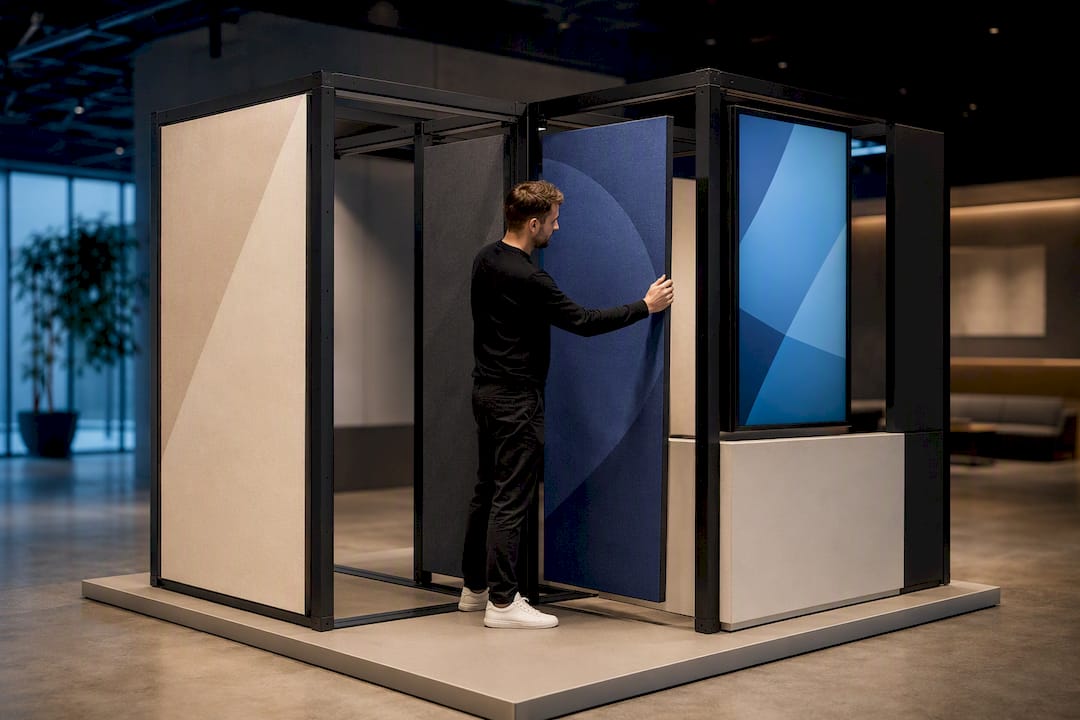
Sampling activations carry their own ethical weight. Free product handouts generate goodwill, but overproduction leads to waste, and packaging choices for single-serve samples deserve the same scrutiny as the main event’s materials.
Data ethics belong in this conversation too. A gamified lead-gen mechanic that obscures what happens to an attendee’s email after they opt in is a short-term win and a long-term trust problem. Transparency about data use isn’t just a legal requirement, it’s part of treating attendees as people rather than conversion targets.
Choosing Scale, Intimacy, and What Comes Next
The industry’s instinct toward bigger builds is often wrong. Smaller, targeted activations regularly outperform mass activations on conversion when they nail the value exchange and data quality. Pick scale for PR and awareness goals; pick intimacy when the KPI is qualified leads or sales.
Three trends worth testing next: creator-led content over centrally scripted campaigns, phygital mechanics that sync venue moments with mobile interaction, and sustainability built into the activation’s core design rather than tacked on as messaging.
On the partnership question, multi-year deals consistently outperform one-off activations for brands chasing cultural relevance rather than a single quarter’s numbers.
— Tyler
Let King Sixteen Handle the Execution
Some agencies offer a turnkey alternative to piecing an activation together across multiple separate vendors. Instead of chasing down fabricators, AV crews, and staffing agencies separately, clients can work with one team that has built those relationships and manages them under a single timeline.
Some agencies specialize in areas such as experiential campaigns and product launches built from concept through live execution; conferences and live event production including stage design, AV, and full run-of-show management; and custom fabrication of brand assets from installations to modular displays built for reuse across events.
If you’re weighing which activation format fits your next sponsorship and want a partner who can move from brief to build without the usual back-and-forth, start with a look at King Sixteen’s experiential services and schedule a discovery call to walk through your specific event and timeline.
Sources
- Why Philips OneBlade built a playable human body inside Fortnite
- How to build a sponsorship activation strategy for 2026
- How to design a brand activation for a sports sponsor
- Gov Ball 2026: How brands engaged music fans
Recommended
- Your step-by-step guide to impactful brand activations
- Brand activation ideas to elevate engagement and ROI
- Innovative event marketing strategies to maximize brand impact
- Ways to Engage Event Attendees That Drive Real Results