The best sampling events today are built the same way a product launch is: themed, experience-led, and measured from the first handoff to the last follow-up email. Success looks like three things happening at once: trial, data capture, and shareable content that keeps working after the event ends. What follows is an idea bank organized by setting, a fast selection checklist, a measurement framework, and a note on when it makes sense to bring in an agency.
TL;DR:
- Samples distributed per staff member should aim for 200 to 400 per day in beverage programs, with staffing ratios of one ambassador for every 150 to 200 attendees per hour.
- Measurement focuses on conversion rates, dwell time, user-generated content, earned impressions, and retailer lift, rather than just counting distributed samples.
- Activation formats should be chosen based on specific objectives like volume, conversion, or brand engagement, and operational compliance must be confirmed early.
- Digital integration such as QR codes, promo codes, and social listening are key to linking offline sampling to online or in-store purchase results.
- Using a turnkey agency like King Sixteen can simplify execution, ensure measurement is built-in, and speed up activation timelines across multiple locations.
Table of Contents
- Sampling event ideas by setting and objective
- How to choose the right format and plan fast
- Measurement and amplification that prove the sample worked
- How King Sixteen executes measurable sampling activations
- Where we see sampling heading next
- King Sixteen: turnkey sampling and activation services
- Sources
- FAQ
Sampling event ideas by setting and objective
Every format below earns its place by solving a specific problem, whether that’s reach, intimacy, or buyer intent. Pick based on your objective first, then your venue.
Festival and live event activations work when you need volume and energy. A branded lounge with a sample tap keeps attendees dwelling longer than a simple handout table, especially when paired with charging stations and photo moments, a combination that festival activations have long used to drive engagement. Micro-influencer demo sessions inside an experience tent extend that reach past the festival gates.
Retail and in-store sampling earns its keep on conversion. Grab-and-go demo kiosks near high-traffic aisles convert browsers quickly, while a shelf-takeover display with a staffed tasting station and a discount code closes the loop between sample and sale. Track register redemptions against the code to see real lift.
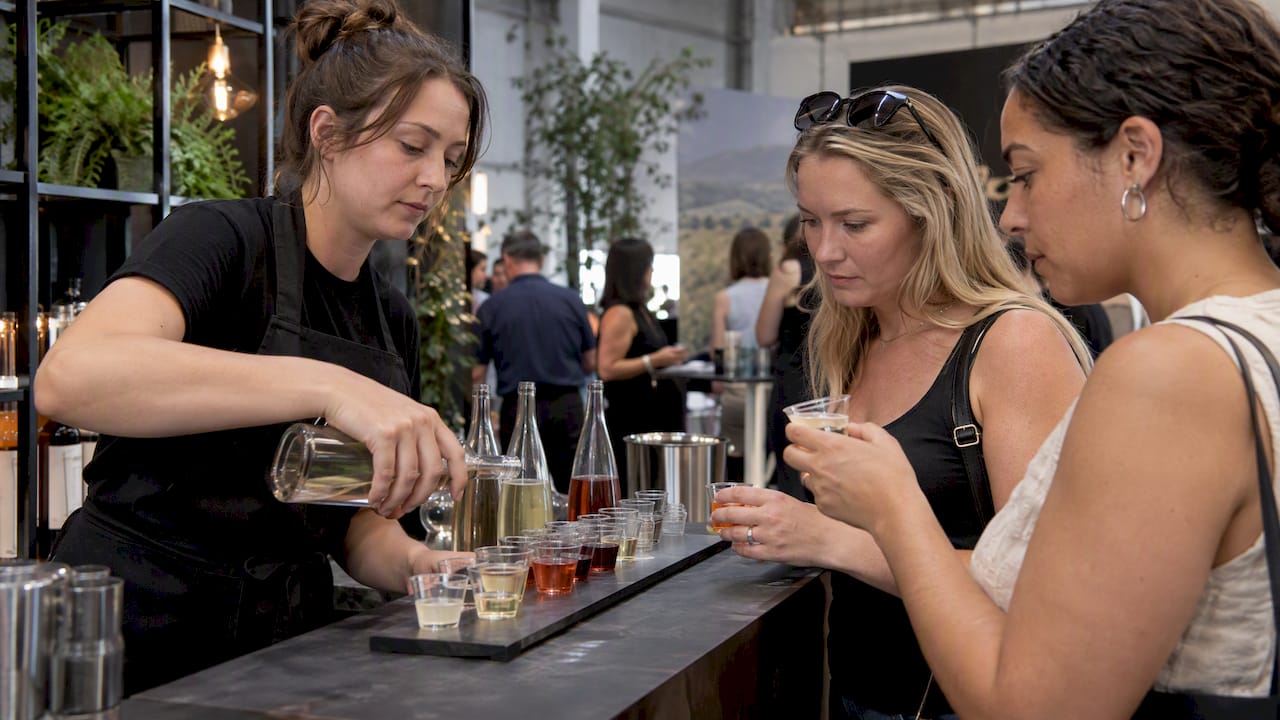
Pop-up and temporary retail is where design does the heaviest lifting. A themed pop-up built around a social-worthy backdrop, paired with a sampling flight bar, invites visitors to try multiple variants while generating content on their own. The Primal Kitchen and Pinterest pop-up paired product trial with social design and influencer partners, producing measurable buzz and retailer-linked promotion. A kitchen demo stage adds a live element that keeps people on-site longer.
Trade show and B2B sampling needs a sharper filter. Targeted sample kits mailed ahead of the show, or handed out only to pre-qualified buyers, protect inventory and keep conversations relevant. Demo pods with lead capture built in, and a meeting-incentive tied to the sample, turn a giveaway into a pipeline entry.
Guerrilla and street sampling thrives on surprise. Walking ambassador teams covering transit hubs or event perimeters can reach people a fixed booth never would, and a built-in social share prompt (a hashtag, a quick scan) captures the moment before it passes.
Hospitality and on-premise programs fit beverage, beauty, and lifestyle brands especially well. Hotel mini-bar placements, concierge sample drops for VIP guests, and tasting events run inside bars or restaurants put product directly into relevant, receptive hands.
Digital-to-IRL activations close the loop between online interest and physical trial. A QR-driven product tap at a retail shelf, an RSVP-only micro-event for top social followers, or an influencer-led sampling moment streamed live all convert digital attention into a real interaction, an approach the AMA’s experiential playbook recommends designing for from the outset rather than bolting on after the fact.
A few operational notes apply across formats:
- Festival and street activations need local permits and crowd-safety plans filed well ahead of the event date.
- Food and beverage sampling requires health department approval and on-site temperature control for perishables.
- Every format needs one clear KPI attached before launch, whether that’s sampling per hour, scan rate, or redemption count.
How to choose the right format and plan fast
Match the format to your constraints before you fall in love with an idea. Run through this order:
- Define the objective: trial, data capture, or direct sales lift.
- Profile the audience and where they naturally gather.
- Confirm your venue footprint and crowd flow.
- Set your sample quantity against realistic samples-per-hour benchmarks.
- Lock the budget, including staffing, fabrication, and permits.
- Check compliance: health permits, alcohol licensing, insurance.
- Build the amplification plan (QR, hashtag, influencer seeding) before day one.
Beverage demo programs often reference 200 to 400 samples per staff member per day depending on footprint and pour time, a useful starting point for staffing math in other categories too.
Pro Tip: Staff one ambassador for every 150 to 200 expected attendees per hour to avoid bottlenecks at peak traffic.
A condensed timeline keeps the plan moving: at T-8 weeks, lock venue and permits; at T-4 weeks, finalize staffing, samples, and creative assets; at T-1 week, confirm run-of-show and compliance paperwork; on the day, brief staff on KPIs and the amplification script before doors open.
Measurement and amplification that prove the sample worked
Samples distributed is a vanity metric on its own. Track samples per hour, conversion rate to purchase or sign-up, dwell time, UGC count, earned impressions, and retailer lift where applicable.
- QR codes linked to unique landing pages isolate traffic by event and location.
- Promo codes tied to the activation connect in-person trial to online or in-store purchase.
- Post-event surveys and social listening fill in sentiment that transaction data misses.
Immersive, co-creative activations report dwell times averaging over 20 minutes, a meaningful jump from the quick in-and-out of a traditional sample table, according to Event Marketer’s reporting on Gen Z activation behavior. Build lead capture and scan-to-redeem flows directly into the experience rather than as an exit-table afterthought, then extend reach with influencer seeding, a UGC contest, and geoframed retargeting aimed at attendees after they leave. Brands increasingly lean on social listening and visual-presence tracking to prove ROI that a simple impression count misses entirely.
How King Sixteen executes measurable sampling activations
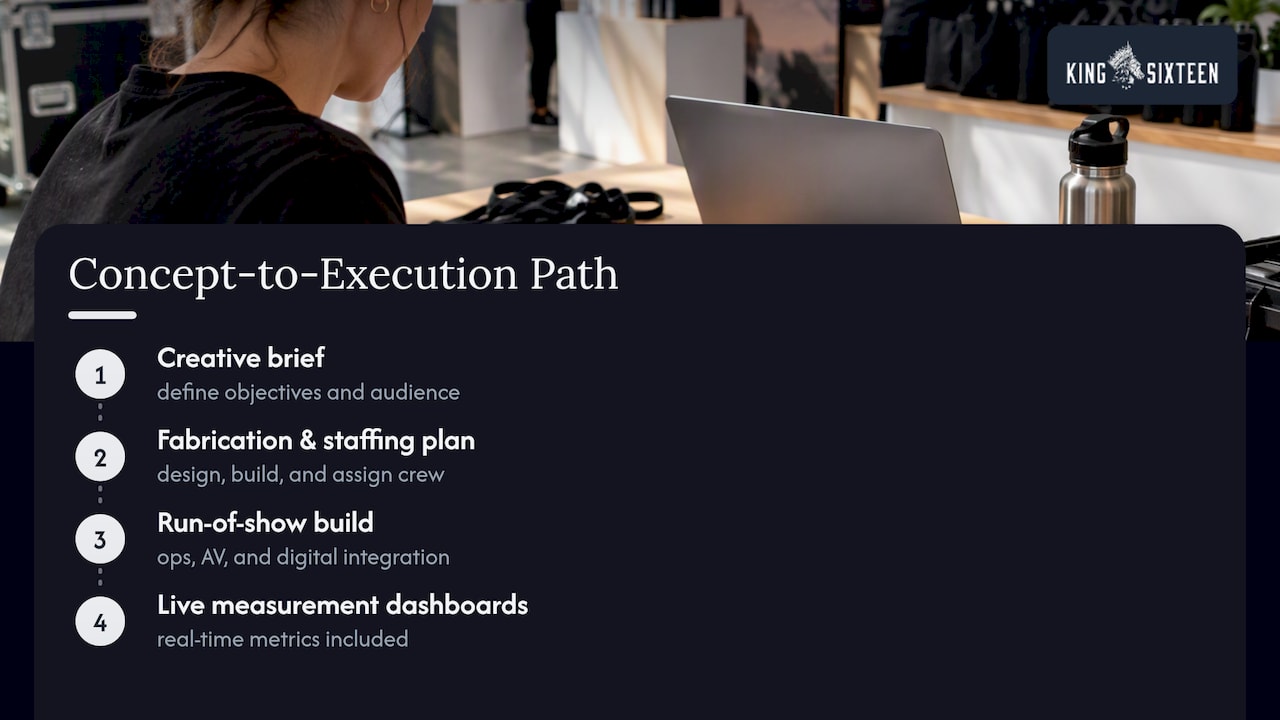
Sampling programs run with one team handling design, fabrication, staffing, AV, and digital integration, so measurement is built in rather than added afterward. This turnkey structure can mean faster execution and a single point of accountability instead of multiple vendors. A typical concept-to-execution path moves through creative brief, fabrication and staffing plan, run-of-show build, and live measurement dashboards. Consider an agency when the footprint spans multiple cities, when measurement needs to tie into a broader campaign, or when the brand build itself needs to feel premium.
Where we see sampling heading next
Gen Z shows up for discovery and co-creation, not a handout, and the data on dwell time backs that up: activations built around participation hold attention far longer than a static table. We’re telling clients to put more budget into physical assets that outlast the event, a tactic worth planning for from the start rather than tacking on at the end, and to resist the urge to track everything. Pick one idea from this list, attach one conversion metric to it, and run it before building a five-channel program around an untested concept.
— Tyler
King Sixteen: turnkey sampling and activation services
Running a sampling program with five vendors is how good ideas get diluted. King Sixteen handles design, fabrication, staffing, and measurement under one roof, which means faster timelines and activations built to prove ROI, not just hand out product.
Clients may benefit from execution speed, measurable results tied to KPIs, and brand moments that last beyond the event itself. See how a turnkey experiential program comes together for your next activation.
FAQ
What are examples of experiential events?
Experiential events include product launches, pop-up activations, festival lounges, and trade show demo pods, any format where attendees interact directly with a brand rather than just viewing an ad. The strongest examples build in measurement, like scan codes or lead capture, from the planning stage.
What is a sampling event?
A sampling event is a marketing activation where a brand distributes product trials directly to a target audience, usually paired with staffing, signage, and a follow-up mechanism like a discount code. Modern sampling events track KPIs such as samples per hour and conversion rate rather than just counting units given away.
What are some creative activation ideas for an event?
Strong options include a sampling flight bar at a pop-up, a QR-driven product tap tied to a landing page, walking ambassador teams for guerrilla reach, and demo pods with built-in lead capture for trade shows. Each works best when paired with one clear KPI and an amplification plan.
Can you give me some examples of brand activation?
Brand activations range from festival lounges with branded hospitality spaces to in-store shelf takeovers with staffed tasting stations and discount codes. Some agencies run turnkey activations that combine custom fabrication, staffing, and digital measurement under one execution plan.
Recommended
- Innovative event ideas for maximum impact and ROI
- Ways to Engage Event Attendees That Drive Real Results
- Step-by-step event staffing: your guide to flawless brand experiences
- Event staffing process: A step-by-step guide for brand impact